

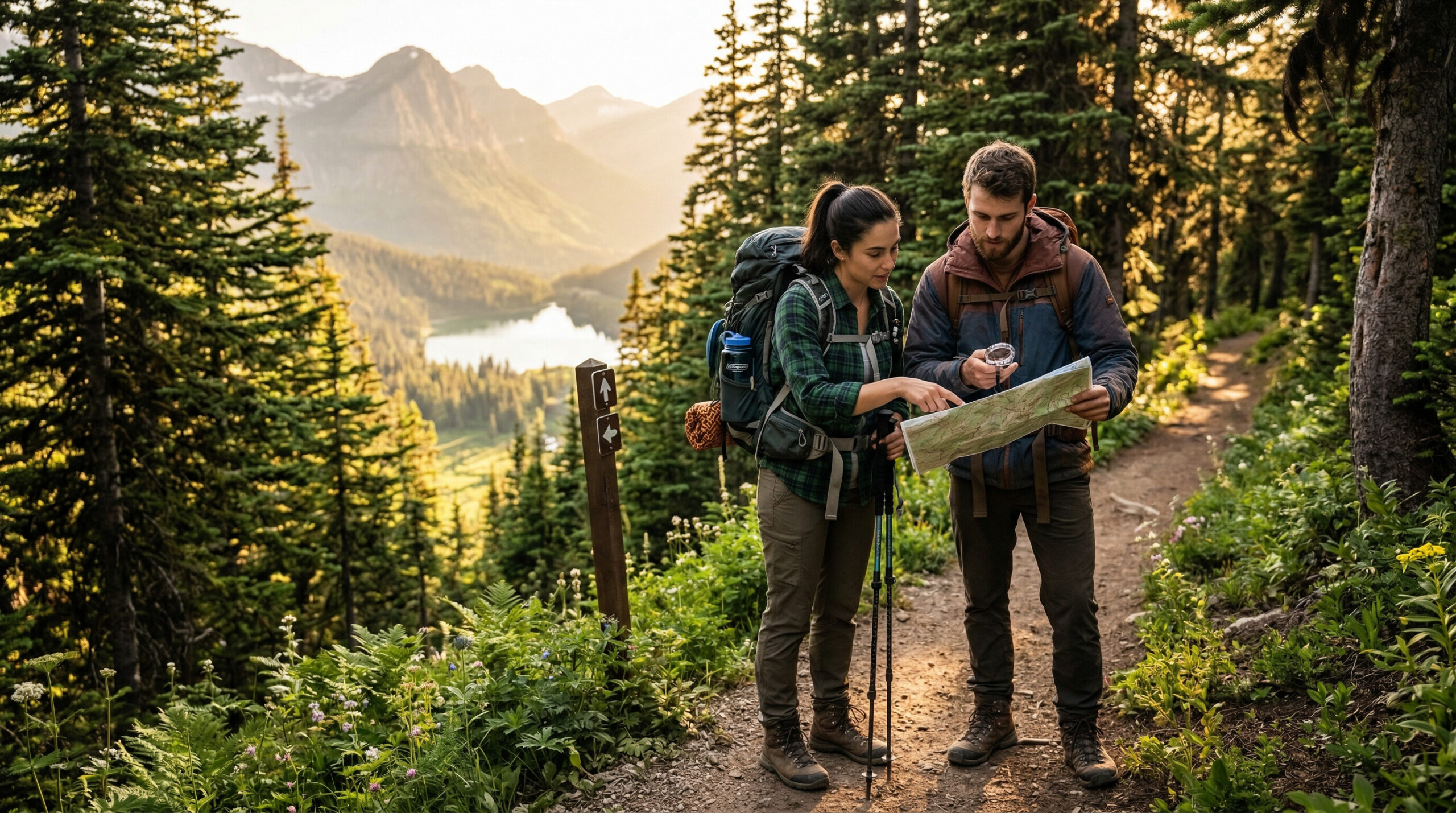
Getting lost is one of the most common concerns for beginners exploring unfamiliar trails, campsites, or waterways. According to the National Search and Rescue Association, most lost-person incidents in the U.S. involve hikers and campers who underestimate terrain difficulty, misread maps, or fail to carry essential navigation tools.
Knowing how to prevent getting lost and what to do if it happens can significantly improve safety and confidence in outdoor settings.
New to hiking? Start with the Beginner Hiking Guide to learn the basics before choosing your first trail.
Step 1: Prevent Getting Lost
Prevention is always the first line of defense. Beginners should:
- Carry a map and compass and know how to use them
- Plan the route and note landmarks
- Inform someone of your expected return time
- Stick to marked trails when hiking or familiar waters when fishing
For full beginner preparation, see Outdoor Safety Basics for Beginners.
Step 2: Stay Calm
Panic can worsen a lost-person situation. Remaining calm helps:
- Preserve energy
- Make rational decisions
- Communicate effectively if needed
Take a few deep breaths, assess your surroundings, and think clearly about your next steps.
Step 3: Stop and Assess
Before moving, try to determine your location:
- Look for landmarks such as rivers, ridges, or trail markers
- Retrace your last known steps if safe to do so
- Use your map, compass, or GPS device to orient yourself
Avoid wandering randomly, which increases the risk of further disorientation.
Step 4: Signal for Help
If you cannot find your way, signaling for help is critical:
- Whistle three short blasts (international distress signal)
- Wave bright clothing or a reflective object
- Use a flashlight or headlamp after dark
- If in remote areas, a personal locator beacon or cell phone (if service is available) can summon rescue
Step 5: Stay Put if Necessary
In many situations, staying in one location increases the chances of being found:
- Search-and-rescue teams typically advise lost individuals to remain visible and stationary if safe
- Build a temporary shelter if you anticipate waiting for several hours or overnight
Step 6: Manage Resources
While waiting for help, conserve energy, warmth, and hydration:
- Drink water regularly
- Eat high-energy snacks if available
- Stay warm using extra clothing or emergency blankets
Guidance on emergency gear is detailed in The 10 Essentials for Outdoor Safety.
Step 7: Navigation if You Must Move
If remaining stationary is unsafe (e.g., due to exposure, flooding, or wildlife), move carefully:
- Travel downhill or follow water sources, which often lead to civilization
- Avoid steep or unstable terrain
- Leave markers to help rescuers track your movement
Step 8: Practice Situational Awareness
After an incident, reflect on what could have prevented it:
- Review map-reading skills
- Carry adequate navigation tools
- Check the weather and terrain before trips
Continuous learning improves safety for future outdoor adventures.
Final Thoughts
Getting lost outdoors is stressful, but proper preparation and knowledge can reduce risks. Beginners should combine preventive navigation, situational awareness, and essential safety gear to stay safe. Remaining calm, signaling effectively, and managing resources can help ensure a positive outcome even in challenging situations.
About the Author
Randy Hartman is the creator of OutdoorDaze, a website focused on practical outdoor education for beginners. His guides emphasize preparation, safety awareness, and realistic approaches to hiking, camping, fishing, and motorcycle touring.