

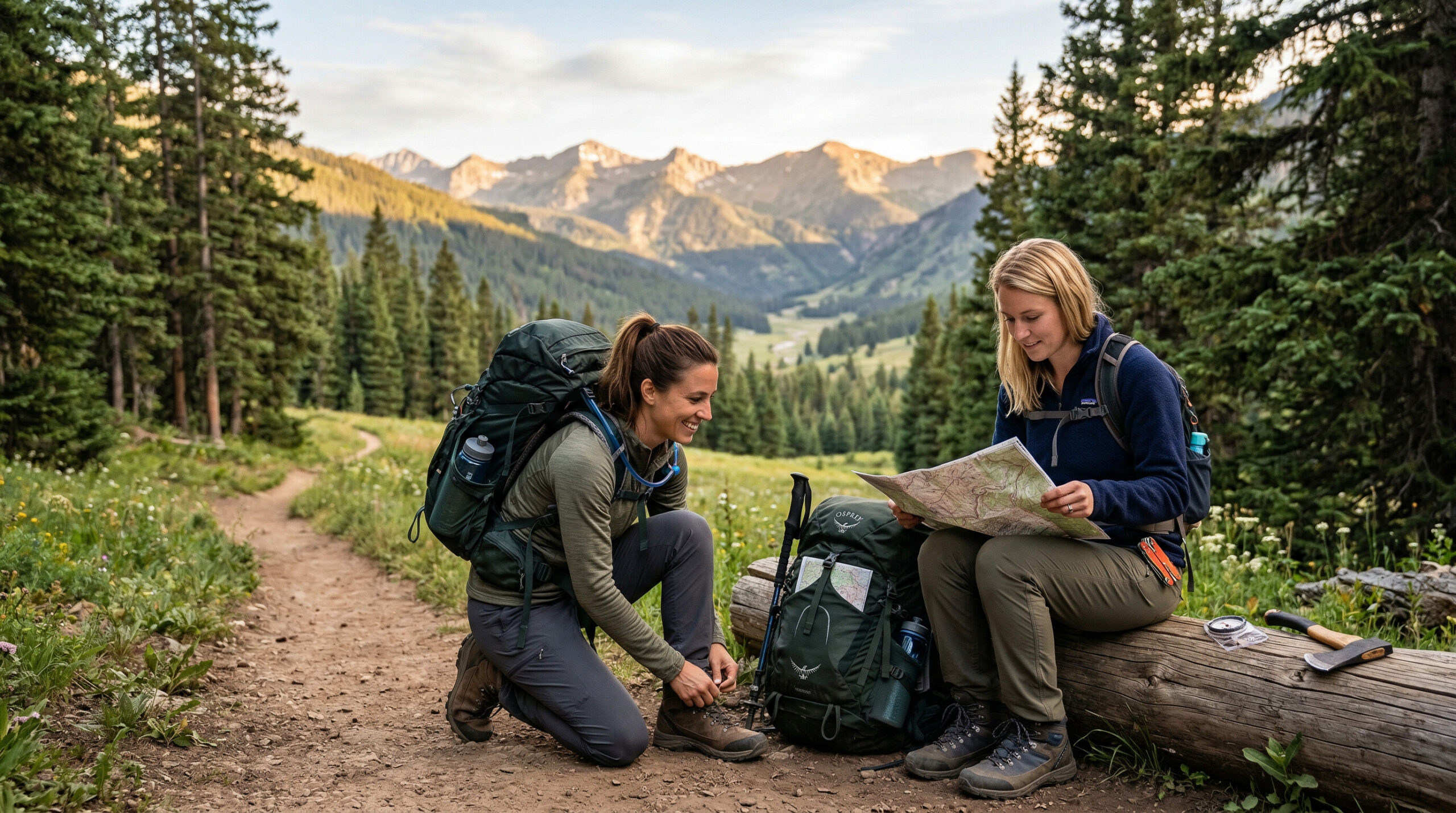
The “Ten Essentials” are widely recognized as the foundation of safe outdoor recreation. Originally formalized by The Mountaineers, these items help hikers, campers, and beginner outdoor enthusiasts manage emergencies, navigate safely, and respond to unexpected conditions.
For beginners, carrying the right essentials can prevent injuries, reduce stress, and improve overall confidence in natural environments.
1. Navigation Tools
Navigation tools help you find your way and avoid getting lost. Essential options include:
- Map and compass
- GPS device or smartphone with offline maps
Knowing how to use a map and compass is highly recommended, even when using GPS devices.
Beginners may also benefit from our Beginner Hiking Checklist for trip prep and route planning.
2. Headlamp or Flashlight
A reliable light source is crucial if your activity extends into evening hours or if you encounter an unexpected delay.
- Headlamps free your hands for other tasks
- Extra batteries should be carried in a waterproof container
3. Extra Sun Protection
Even on cloudy days, UV exposure can cause sunburn and long-term skin damage. Essentials include:
- Sunscreen
- Sunglasses
- Hat or cap
4. First Aid Supplies
A compact first aid kit can help manage minor injuries such as cuts, scrapes, and blisters.
Include:
- Bandages and antiseptic wipes
- Pain relievers
- Tweezers and safety pins
Refer to our Beginner Camping Essentials guide for additional safety gear.
5. Extra Clothing
The weather can change quickly in outdoor environments. Layered clothing helps regulate temperature and manage moisture.
- Base layer for moisture wicking
- Insulating layer for warmth
- Waterproof shell for rain or wind
6. Extra Food and Water
Carry more food and water than expected to maintain energy and hydration.
- High-energy snacks like trail mix or granola bars
- Water bottles or hydration bladders
- Water purification tablets or filters for longer trips
7. Fire Starter
A fire can provide warmth, signal for help, and support cooking. Options include:
- Matches or lighters in waterproof packaging
- Firestarter sticks or tinder
8. Emergency Shelter
Even for day trips, a lightweight shelter can protect from wind or rain:
- Emergency bivy or blanket
- Lightweight tarp
- Tent if overnighting
9. Knife or Multi-Tool
A versatile tool can assist with gear repair, food prep, and emergencies:
- Fixed blade knife or multi-tool
- Safety knowledge on proper use
10. Communication Device
Being able to signal for help is critical:
- Cell phone with a charged battery
- Personal locator beacon or satellite messenger in remote areas
Putting the Ten Essentials Together
The Ten Essentials are designed to cover survival basics: navigation, illumination, protection, health, hydration, fire, shelter, tools, and communication. Carrying and knowing how to use them significantly reduces risk and improves confidence for beginners in outdoor activities.
- Outdoor Safety Basics for Beginners – overview of preparation and situational awareness
- Beginner Hiking Checklist – apply essentials to hiking trips
- Beginner Camping Essentials – apply essentials to camping trips
Final Thoughts
The Ten Essentials provide a framework for safety and preparedness in the outdoors. Beginners should start with small, manageable trips while practicing how to use each item. Over time, understanding and experience make outdoor exploration safer and more enjoyable.
About the Author
Randy Hartman is the creator of OutdoorDaze, a website focused on practical outdoor education for beginners. His guides emphasize preparation, safety awareness, and realistic approaches to hiking, camping, fishing, and motorcycle touring.