

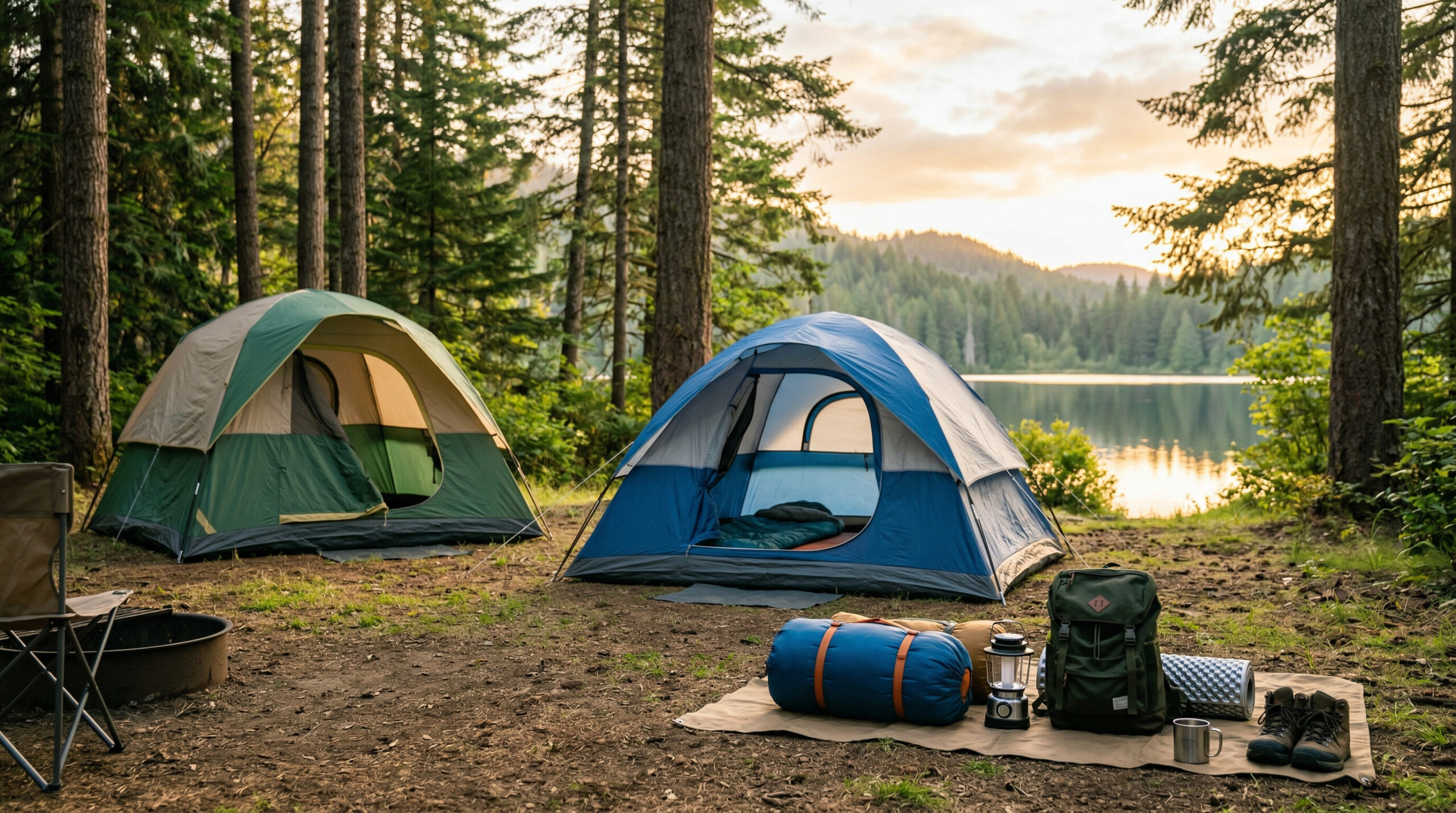
Beginner-friendly tents that are easy to set up, comfortable, and worth your money.
| Difficulty | Beginner |
| Estimated Read Time | 2 minutes |
| Best For | New campers |
| You’ll Learn | Which camping tents are best for beginners |
Why Choosing the Right Beginner Tent Matters
Your tent is the foundation of your entire camping experience.
The wrong one can mean:
- Difficult setup
- Poor weather protection
- Uncomfortable nights
The right one?
- Sets up quickly
- Keeps you dry
- Makes camping actually enjoyable
This guide focuses on simple, reliable tents that work well for beginners—without overcomplicating things.
How We Chose These Tents
These recommendations are based on what matters most for beginners:
- Ease of setup (critical)
- Weather protection (3-season reliability)
- Interior space (comfort matters)
- Value for money
Marmot Limelight 2-Person Tent
A solid option for campers who want a quality two-person tent from an established outdoor brand. The Limelight offers a good balance of space, weather protection, and livability for recreational camping.
Best Overall Beginner Tent
Coleman 4-Person Dark Room™ Skydome™ Camping Tent
A dependable, beginner-friendly tent designed for quick setup and comfortable weekend camping. The Coleman Skydome features a spacious interior, WeatherTec weather protection, and a straightforward design, making it a practical choice for first-time campers. A solid option for families, couples, or anyone looking for an affordable tent from a trusted camping brand.
Best for Couples or Extra Space
Coleman 6-Person Skydome™ Camping Tent
A spacious, beginner-friendly tent designed for family camping and weekend getaways. The Coleman 6-Person Skydome offers plenty of room for campers and gear, quick setup with pre-attached poles, and WeatherTec™ weather protection to help keep you comfortable when conditions turn wet—a practical choice for families who want extra space without stepping up to a much larger tent.
Best Lightweight Option (Beginner-Friendly)
Coleman 4-Person Flatwoods II™ Lightweight Dome Camping Tent
A lightweight and compact tent that’s easy to transport and well suited for weekend camping trips. The Coleman Flatwoods II weighs just 8.8 pounds, fits a queen-size airbed, and includes a rainfly and WeatherTec™ features for added weather protection. A practical choice for beginners who want a comfortable tent without carrying a heavier family-size model.
Best Budget Option
Coleman 4-Person Skydome™ Camping Tent
An affordable, beginner-friendly tent that delivers a great balance of convenience, space, and weather protection. The Coleman Skydome sets up in under five minutes with pre-attached poles and features WeatherTec™ protection to help keep you and your gear dry. A great budget choice for weekend camping, car camping, and first-time campers.
Best Family Option
Coleman 6-Person Dark Room™ Skydome™ Camping Tent
A spacious family tent designed to make warm-weather camping more comfortable. Coleman’s Dark Room™ technology blocks most sunlight to help keep the tent darker and cooler during the day, while the spacious interior provides plenty of room for family camping trips. With WeatherTec™ weather protection and a quick setup, it’s a great choice for families who want extra comfort at the campsite.
What You’ll Still Need (Don’t Skip This)
Even the best tent needs a few supporting items:
- Tent footprint or ground tarp: A properly sized footprint or ground tarp can help protect your tent floor from moisture, rocks, and abrasion. Make sure it fits beneath the tent floor and doesn’t extend beyond the edges, where it could collect rainwater.
- Durable tent stakes (better stability than stock ones)
- Rubber mallet for tent stakes (makes setup easier)
These small additions make a big difference in performance and longevity.
Common Beginner Mistakes When Buying a Tent
Buying too small
A 2-person tent is usually tight for 2 people + gear.
Ignoring setup difficulty
Complicated tents lead to frustration fast.
Skipping weather protection
A full rainfly is worth it.
Frequently Asked Questions
The best tent for a beginner is one that is easy to set up, provides enough room for the number of people using it, and offers reliable protection from the weather. For most beginners, a simple two- or three-person tent with straightforward setup is a good place to start.
Beginners do not necessarily need to spend a lot on their first tent. A quality budget or mid-range tent can provide everything needed for occasional camping. Focus on important features such as weather protection, durability, size, and ease of setup rather than simply choosing the cheapest option.
If you’re camping alone or with one other person and want to keep your setup compact, a two-person tent can work well. A three-person tent provides additional room for two campers and their gear and may be more comfortable for longer trips. When in doubt, choosing one size larger can provide useful extra space.
Not necessarily. Larger tents provide more living space but are usually heavier, take longer to set up, and can require more room at the campsite. Beginners should choose a tent based on how many people will use it and how much gear they need to store rather than simply choosing the largest tent available.
Look for a tent that is easy to assemble, has adequate interior space, provides good ventilation, includes a rainfly, and offers dependable weather protection. You should also consider packed size, weight, materials, and how you’ll transport the tent to your campsite.
Yes. A quality three-season tent is usually the best choice for beginners because it is designed for the conditions most recreational campers encounter during spring, summer, and fall. Unless you specifically plan to camp in severe winter conditions, you generally do not need a four-season tent.
Water resistance is one of the most important features to consider. A good tent should have a properly designed rainfly, protected seams, and a floor that helps keep moisture from entering. Remember that proper setup and campsite selection are also important for staying dry during rain.
A quality tent can last for many years when it is properly used, cleaned, dried completely before storage, and protected from unnecessary wear. How long it lasts depends on the tent’s materials, construction, frequency of use, and how well it is maintained.
Related Guides
Before heading out, these will help you get the most out of your tent:
How to Set Up a Tent
Learn how to set up your tent step by step, from choosing the right campsite to securing the rainfly, so you can get your shelter ready with confidence.
How to Choose the Right Tent
Learn how to choose a tent based on size, weather protection, setup, and camping style to find the right shelter for camping.
Final Thoughts
You don’t need the most expensive tent—you need one that’s:
- Easy to set up
- Reliable in weather
- Comfortable for your needs
Start simple, learn what you like, and upgrade over time.
If you don’t want to wait and prefer to upgrade now,
Shop our Halo 6-Person Tent, Perfect For Outdoor Adventures | Marmot
Continue Your Outdoor Journey
Building your camping setup doesn’t happen all at once. The best gear choices come from understanding your needs, your camping style, and the adventures you want to enjoy.
Whether you’re preparing for your first camping trip or upgrading your current equipment, OutdoorDaze offers beginner-friendly guides to help you choose gear with confidence.
Explore our camping resources to discover practical recommendations, helpful buying guides, and tips designed to make getting outdoors easier.
Meet the Author
Randy Hartman
Outdoor enthusiast, motorcycle traveler, camper, photographer, and website creator with a passion for helping beginners enjoy the outdoors with confidence. Through OutdoorDaze, I share practical guides, honest gear recommendations, and easy-to-follow advice to help you spend more time exploring and less time feeling overwhelmed.