

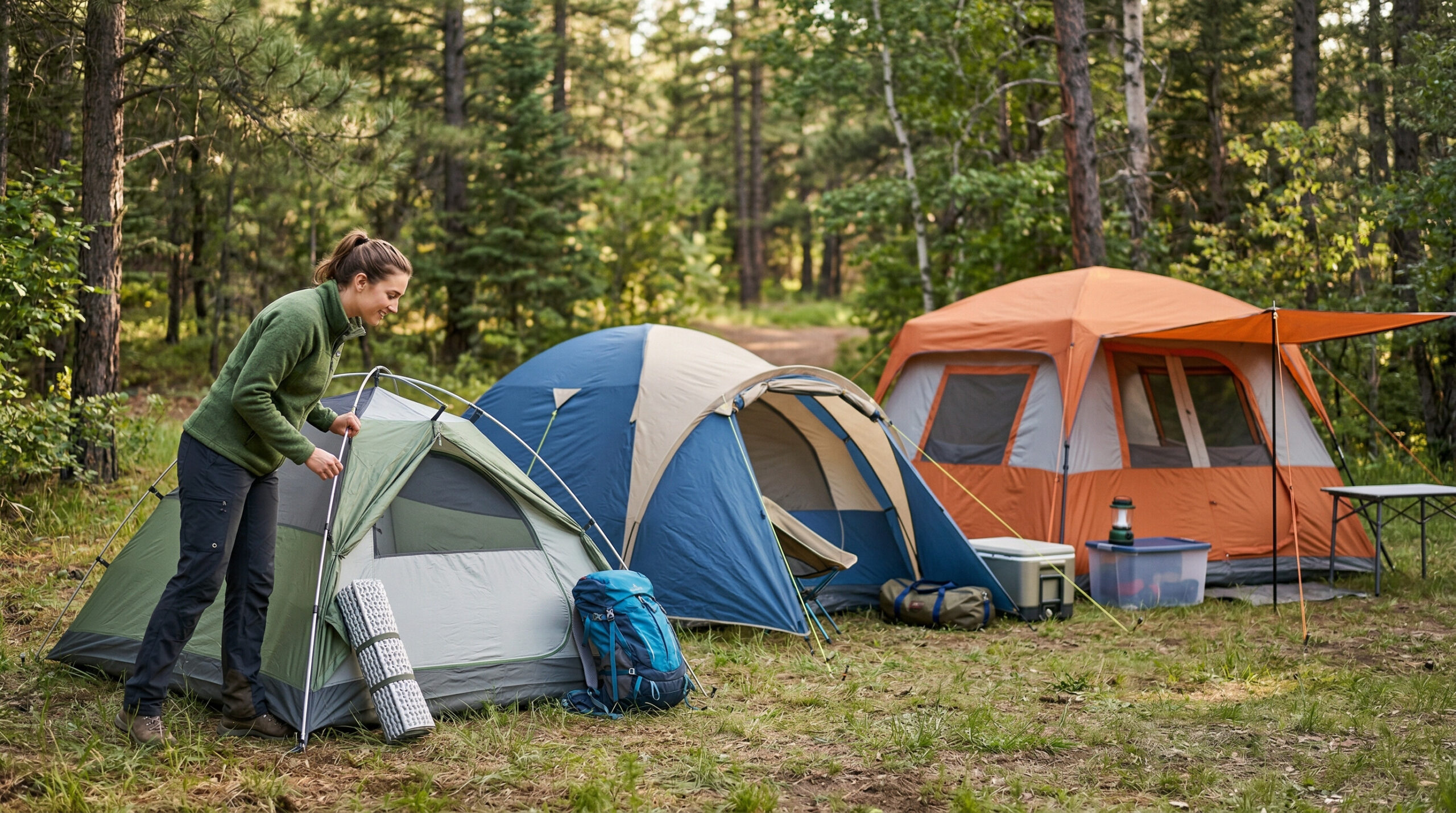
Simple, no-fluff guidance to help you pick the right tent without overspending or getting overwhelmed.
Why Choosing the Right Tent Matters
For beginners, tents can feel confusing fast—2-person, 3-season, freestanding, backpacking…
But here’s the truth:
Most people don’t need the “best” tent—they need the right tent for how they actually camp.
Choosing correctly means:
- Better sleep
- Easier setup
- Less frustration outdoors
Step 1: Decide How You’ll Use the Tent
Before looking at specs, answer this:
How are you going to camp most of the time?
Car Camping (Most Beginners)
- You drive to your campsite
- Weight doesn’t matter
- Comfort and space matter more
✔ Best choice: larger, easy-to-set-up tents
Hiking / Backpacking
- You carry everything
- Weight and pack size matter
✔ Best choice: lightweight backpacking tents
If you’re new, start with car camping gear—it’s easier and more forgiving.
Step 2: Choose the Right Size
Tent sizes are often misleading.
A “2-person tent” usually means:
2 people with almost no extra space
Beginner Recommendation:
- Solo camper → 2-person tent
- 2 people → 3–4 person tent
This gives you room for:
- Gear
- Comfort
- Better airflow
Step 3: Understand 3-Season vs 4-Season
Most beginners only need one type:
3-Season Tents (Best Choice)
Designed for:
- Spring
- Summer
- Fall
Handles:
- Rain
- Wind
- Mild weather
4-Season Tents
Built for:
- Snow
- Extreme wind
- Harsh winter conditions
Heavier, more expensive, and unnecessary for most beginners
Step 4: Check Setup Type (Important for Beginners)
If the setup is complicated, you won’t enjoy camping.
Look for:
- Freestanding design
- Color-coded poles
- Clip-based setup
These features make a beginner-friendly camping tent much easier to handle.
Step 5: Look at Weather Protection
Not all tents handle rain equally.
Key features:
- Full rainfly (covers entire tent)
- Waterproof floor (look for higher durability materials)
- Sealed seams
Partial rainflies are common on cheaper tents—but full coverage is much more reliable.
Step 6: Ventilation Matters More Than You Think
Poor airflow = condensation = damp interior
Look for:
- Mesh panels
- Roof vents
- Dual doors (if possible)
Step 7: Weight (Only If You Need It)
If you’re car camping:
Don’t worry about weight
If you’re hiking:
- Look for lightweight tents (2–4 lbs range typically)
Step 8: Don’t Overlook Stakes & Accessories
Many tents include basic stakes—but they’re often low quality.
Upgrading to durable tent stakes and using a rubber mallet for tent stakes can make setup much easier (especially on hard ground).
How Much Should You Spend?
For beginners, a solid range is:
- Budget: $50–$100
- Mid-range: $100–$250
- Premium: $250+
You don’t need premium gear to start—reliability matters more than brand.
Simple Beginner Tent Setup (Recommended)
If you want to keep things easy, this setup works for most people:
- A beginner-friendly camping tent (3-season, slightly oversized)
- A tent footprint or ground tarp
- A set of durable tent stakes
- A rubber mallet for easy setup
This combination covers comfort, protection, and ease of use.
Helpful Next Steps
- How to Set Up a Tent (Step-by-Step for Beginners)
- Best Camping Gear for Beginners (Budget-Friendly Setup)
Common Mistakes to Avoid
Buying too small
This is the most common regret.
Overpaying for features you don’t need
Keep it simple, starting.
Ignoring setup difficulty
A complicated tent = a frustrating trip.
Final Thoughts
Choosing the right tent doesn’t have to be complicated.
Focus on:
- How you’ll use it
- Getting the right size
- Choosing beginner-friendly features
Do that, and you’ll end up with a tent that actually makes camping enjoyable.
👤 About the Author
Randy Hartman is the founder of OutdoorDaze, where he shares beginner-friendly, experience-based guides on camping, hiking, and outdoor gear. His goal is to help people get outside with confidence—without overcomplicating the process.