

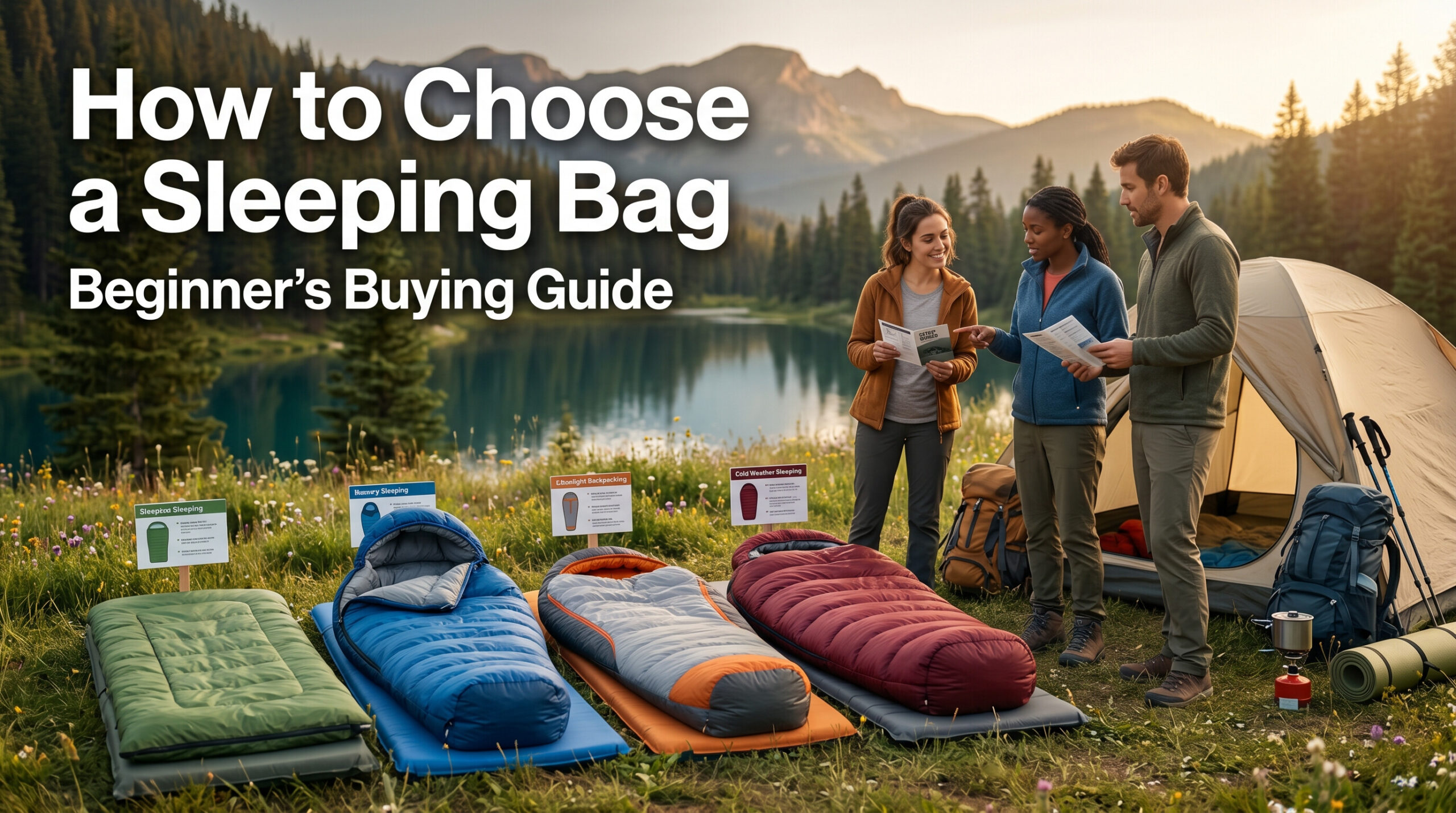
Choosing the right sleeping bag is one of the most important decisions you’ll make when building your camping setup. A quality sleeping bag helps you stay warm, comfortable, and well-rested so you can enjoy your outdoor adventures. Unfortunately, many beginners buy a sleeping bag based solely on price and end up too hot, too cold, or uncomfortable throughout the night.
The good news is that choosing the right sleeping bag doesn’t have to be complicated. In this beginner’s guide, I’ll explain the key factors to consider, so you can confidently select a sleeping bag that matches your camping style, expected weather conditions, and budget.
Why Your Sleeping Bag Matters
Your sleeping bag plays a major role in your overall camping comfort. Even at moderate temperatures, a poor sleeping setup can lead to restless nights and an unpleasant camping experience.
A good sleeping bag helps:
- Maintain body heat during cooler nights
- Improve overall comfort and sleep quality
- Protect against changing weather conditions
- Enhance your enjoyment of outdoor adventures
For most beginner campers, comfort should be the primary goal rather than buying the lightest or most expensive option available.
Understand Temperature Ratings
One of the first things you’ll notice when shopping for sleeping bags is the temperature rating.
This rating indicates the lowest temperature at which the sleeping bag is designed to keep most campers comfortable.
Common Temperature Ratings
40°F Sleeping Bags
- Best for warm summer camping
- Lightweight and comfortable
- Not ideal for cooler spring or fall nights
20°F Sleeping Bags
- Excellent all-around choice
- Suitable for most three-season camping
- Ideal for many beginner campers
0°F Sleeping Bags
- Designed for cold-weather camping
- Often too warm and bulky for typical summer use
Beginner Recommendation
For most beginners, a sleeping bag rated between 20°F and 30°F offers the best combination of comfort, versatility, and value.
Choose the Right Sleeping Bag Shape
Sleeping bags come in several different shapes, each with its own advantages.
Mummy Sleeping Bags
Mummy bags taper toward the feet and fit closely around the body.
Pros
- Excellent warmth retention
- Lightweight
- Efficient design
Cons
- Less room to move around
- Can feel restrictive for some campers
Rectangular Sleeping Bags
Rectangular bags provide a more spacious sleeping experience.
Pros
- Comfortable and roomy
- Easier to move around in
- Great for casual campers
Cons
- Heavier
- Less efficient at retaining heat
Semi-Rectangular Sleeping Bags
Also called barrel-shaped bags, these offer a balance between comfort and warmth.
Pros
- More spacious than mummy bags
- Better insulation than rectangular bags
Cons
- Slightly heavier than mummy designs
Beginner Recommendation
Most beginner campers will appreciate the comfort of a rectangular or semi-rectangular sleeping bag.
Synthetic vs. Down Insulation
The insulation inside a sleeping bag affects warmth, weight, packability, and cost.
Synthetic Insulation
Synthetic insulation is the most popular option for beginner campers.
Pros
- Affordable
- Performs well when wet
- Easy to maintain
- Widely available
Cons
- Bulkier than down
- Heavier
Down Insulation
Down insulation comes from duck or goose feathers.
Pros
- Lightweight
- Highly compressible
- Excellent warmth-to-weight ratio
Cons
- More expensive
- Loses effectiveness when wet unless specially treated
Beginner Recommendation
Synthetic sleeping bags provide the best combination of value, durability, and ease of use for most beginners.
Consider Size and Fit
Sleeping bags are available in different lengths and widths.
A sleeping bag that is too small can feel cramped and uncomfortable. One that is too large may leave extra air space that your body must warm.
Most manufacturers offer:
- Regular
- Long
- Women’s-specific
- Youth sizes
Choose a size that comfortably fits your height and sleeping style.
Think About Your Camping Style
The best sleeping bag depends largely on how you plan to camp.
Car Camping
Weight and pack size are less important.
Prioritize:
- Comfort
- Roominess
- Warmth
Hiking and Backpacking
Weight and packability become more important.
Prioritize:
- Lightweight materials
- Compact packed size
- Efficient insulation
Most beginner campers start with car camping, making comfort the more important factor.
Don’t Forget the Sleeping Pad
One of the biggest mistakes beginners make is focusing only on the sleeping bag.
A sleeping pad provides:
- Cushioning
- Ground insulation
- Additional warmth
Even the best sleeping bag cannot fully prevent heat loss to the ground without a quality sleeping pad.
Common Sleeping Bag Mistakes
Buying Based Only on Price
The cheapest option is not always the best value.
Choosing the Wrong Temperature Rating
Many beginners buy bags that are either too warm or too cold for their typical camping conditions.
Ignoring Comfort
A bag that feels restrictive may reduce sleep quality even if it keeps you warm.
Skipping a Sleeping Pad
A sleeping pad is an essential part of your sleep system.
Frequently Asked Questions
A 20°F to 30°F sleeping bag is usually the best all-around choice for three-season camping.
Mummy bags are generally warmer and more efficient, while rectangular bags offer greater comfort and roominess.
Synthetic insulation is often the better choice for beginners due to its affordability, durability, and performance in wet conditions.
Many quality beginner sleeping bags are available between $50 and $150.
Final Thoughts
Choosing a sleeping bag doesn’t have to be overwhelming. By understanding temperature ratings, insulation types, sleeping bag shapes, and your own camping style, you can find a sleeping bag that keeps you comfortable on your outdoor adventures.
For most beginners, a synthetic sleeping bag rated between 20°F and 30°F offers the best balance of comfort, versatility, and value. Pair it with a quality sleeping pad, and you’ll be well on your way to enjoying better nights under the stars.
If you’re building your camping setup, be sure to check out my guides on Best Sleeping Bags for Beginners, Beginner Camping Gear I Recommend, Best Camping Gear for Beginners, and What to Bring Camping.
For more tips and suggestions when starting camping, be sure to see Camping Gear for Beginners, and read my guide, What to Bring Camping.