

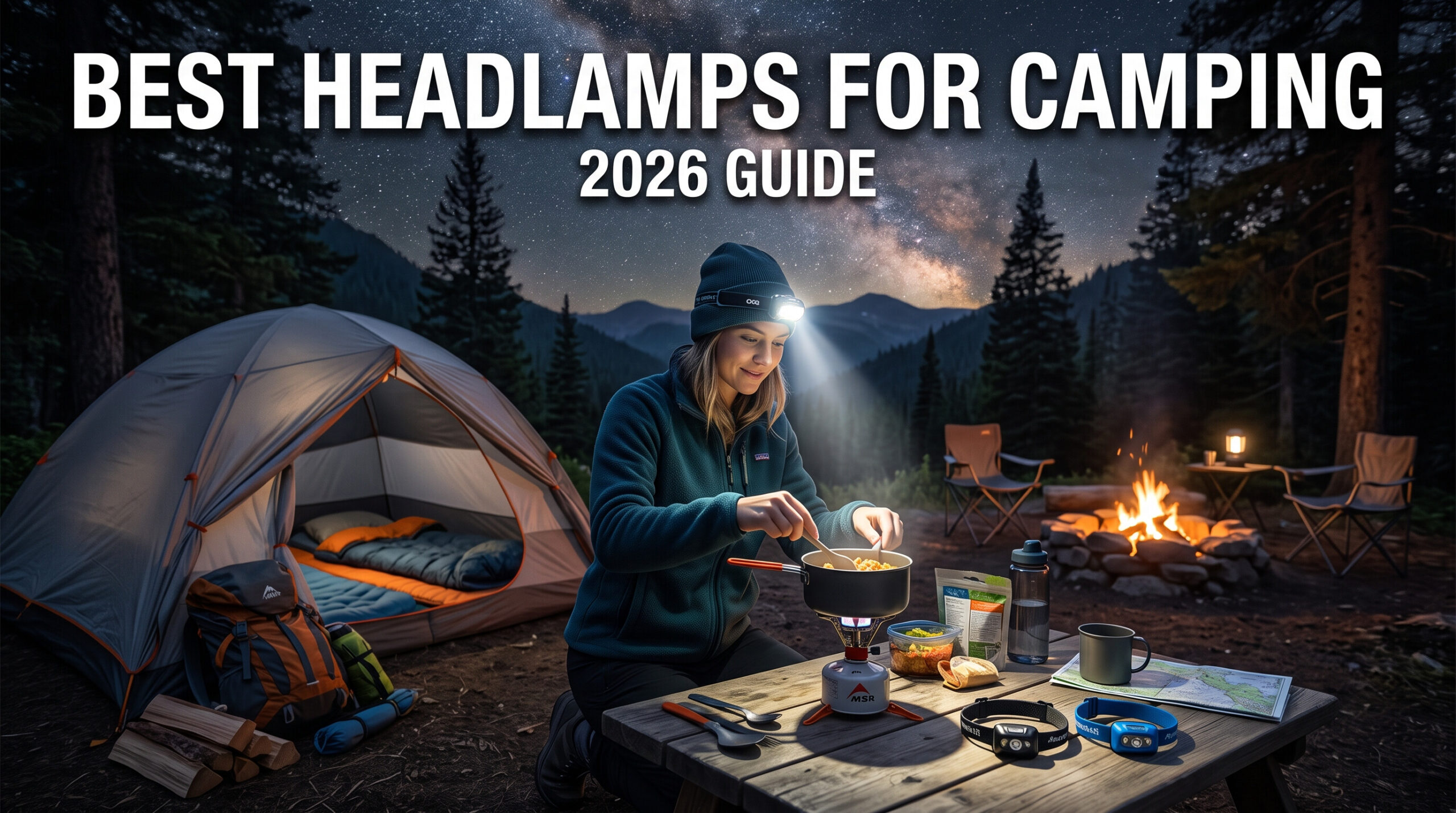
Whether you’re setting up camp after sunset, preparing a meal in the dark, or finding your way to the restroom at night, a reliable headlamp is one of the most useful pieces of camping gear you can carry. Unlike flashlights, headlamps keep your hands free while directing light exactly where you’re looking.
For beginners, choosing a headlamp can be confusing. With so many brightness levels, battery options, and features available, it’s easy to wonder which one is actually worth buying. Fortunately, you don’t need the most expensive model to enjoy dependable lighting around camp.
In this guide, we’ll explain what to look for when choosing a camping headlamp and highlight some of the best headlamps for camping in 2026, with practical options for beginners who want reliable lighting without unnecessary features.
Why Bring a Headlamp Camping?
A headlamp is one of the most versatile lighting tools you can own. Because you wear it on your head, you can comfortably use both hands while working around camp.
A quality headlamp is ideal for:
- Setting up a tent after dark
- Cooking meals at the campsite
- Walking to restrooms or water stations
- Gathering firewood
- Reading maps or guidebooks
- Handling emergencies
For beginners, a dependable headlamp makes nighttime camping activities safer, easier, and more convenient. Whether you’re navigating a dark campsite or handling an unexpected situation, having reliable hands-free lighting can make a noticeable difference in your overall camping experience.
What to Look for in a Camping Headlamp
Before choosing a headlamp, consider these important features.
Brightness
Headlamp brightness is measured in lumens.
General recommendations:
- 100–200 lumens: Reading, tent use, and close-range tasks
- 200–400 lumens: Most camping activities
- 400+ lumens: Hiking, trail use, and maximum visibility
For most beginner campers, a headlamp in the 200–400 lumen range provides an excellent balance of brightness and battery life.
Keep in mind that more lumens don’t always mean a better camping headlamp. Beam distance, battery runtime, and adjustable brightness settings are just as important, especially when you need dependable lighting throughout the evening.
Battery Type
Rechargeable Headlamps
Pros
- Convenient USB charging
- No disposable batteries
- Lower long-term cost
Cons
- Must be recharged before trips
Battery-Powered Headlamps
Pros
- Easy to replace batteries
- Great for extended trips
- Widely available batteries
Cons
- Ongoing battery expense
For most beginners, a rechargeable headlamp is a convenient choice for weekend camping trips, especially when you have access to a power bank. If you frequently camp for several days without electricity, a model that accepts replaceable batteries—or supports both power options—may offer greater flexibility.
Comfort
Since you’ll wear the headlamp for extended periods, look for:
- Adjustable headband
- Lightweight design
- Comfortable fit
Beam Modes
Many modern headlamps offer multiple lighting modes, including:
- High
- Medium
- Low
- Red light
- Flashing or emergency mode
A red-light mode is especially useful because it helps preserve your night vision and is less disruptive to others around camp.
Weather Resistance
Choose a headlamp designed for outdoor use with a suitable water-resistance rating. Many camping headlamps carry an IP rating that indicates their protection against water and dust. For example, an IPX4 rating means the headlamp can withstand splashing water, making it a practical choice for occasional rain or damp camping conditions. If you regularly camp in heavy rain, consider a model with a higher water-resistance rating.
Best Headlamps for Camping
Best Overall Headlamp
Black Diamond Spot 400-R
Why It’s Great
- Up to 400 lumens for campsite activities and nighttime navigation
- Built-in rechargeable battery for convenient everyday use
- Adjustable brightness and red-light mode for different camping situations
- Comfortable, low-profile design with an adjustable headband
- IP67-rated protection against dust and water
Best For
Beginner and experienced campers who want a versatile, rechargeable headlamp for everyday campsite activities, nighttime walks, and occasional hiking.
Best Budget Headlamp
Energizer Vision HD+
Why It’s Great
- Up to 350 lumens for everyday campsite activities
- Uses three replaceable AAA batteries, which are included
- Multiple lighting modes, including red light for nighttime use
- Adjustable headband and pivoting light for added convenience
- IPX4 water resistance helps protect against splashing water
Best For
Beginner campers who want an affordable, easy-to-use headlamp for occasional camping trips, nighttime walks, and everyday campsite activities without needing to recharge a built-in battery.
Best Rechargeable Headlamp
PETZL Actik Core
Why It’s Great
- Up to 625 lumens for campsite activities and nighttime trail use
- Includes a rechargeable CORE battery with convenient USB-C charging
- Can also operate with three AAA batteries for added flexibility
- Lightweight design with adjustable brightness and red-light mode
- Wide and mixed beam options for close-range tasks and longer-distance visibility
Best For
Frequent campers and outdoor enthusiasts who want a powerful rechargeable headlamp with the flexibility to use replaceable batteries during longer trips away from electricity.
Best Lightweight Headlamp
NITECORE NU25 UL
Why It’s Great
- Extremely lightweight design, weighing approximately 45 grams
- Up to 400 lumens for campsite activities and nighttime trail use
- USB-C rechargeable battery eliminates the need for disposable batteries
- Spotlight, floodlight, and red-light modes for different lighting needs
- Compact design with IP66-rated protection against dust and water
Best For
Backpackers, hikers, and campers who want a compact, lightweight headlamp that provides dependable lighting without adding unnecessary weight to their gear.
Best for Family Camping
Coast FL75R
Why It’s Great
- Bright, adjustable lighting for nighttime campsite activities
- Twist-focus beam adjusts between wide-area lighting and a focused spotlight
- Rechargeable battery with the option to use three AAA batteries
- Multiple brightness settings and additional colored-light modes
- Durable, water-resistant design suitable for general outdoor use
Best For
Families and recreational campers who want a versatile headlamp for nighttime walks, setting up camp, cooking, and other activities where adjustable lighting and flexible battery options are helpful.
Headlamp vs Flashlight
Many beginners wonder whether they should pack a flashlight instead.
Headlamp Advantages
- Hands-free operation
- Lightweight
- Comfortable for extended use
- Directs light wherever you look
Flashlight Advantages
- Some models offer higher brightness and longer-distance beams
- Easy to share
- Doesn’t require wearing on your head
For most beginner campers, a headlamp is the more practical everyday choice because it keeps both hands free for cooking, setting up camp, and moving around after dark. However, a flashlight can still be a useful backup, especially when you need a handheld light or want to share a light source with someone else. Carrying both provides additional flexibility during camping trips.
Common Headlamp Mistakes
Buying More Brightness Than You Need
Choosing the brightest headlamp available isn’t always necessary for camping. Higher brightness settings typically consume more battery power, and excessive light can be uncomfortable for others around camp. For most beginners, a headlamp with adjustable brightness settings offers better flexibility for everyday campsite activities.
Ignoring Battery Life
A headlamp may advertise impressive brightness, but its runtime can decrease significantly when used at maximum power. Before buying, check how long the headlamp operates at different brightness settings. For typical camping trips, dependable runtime at low and medium brightness is often more useful than maximum output.
Forgetting a Backup Power Source
Running out of power after dark can quickly become inconvenient. If your headlamp uses replaceable batteries, pack a spare set. For rechargeable models, bring a compatible charging cable and a charged power bank. Having a backup lighting option is also a smart precaution, especially when camping away from developed campgrounds.
Not Learning the Controls
Some headlamps include several brightness levels, red-light settings, and special operating modes. Take a few minutes to learn how your headlamp works before leaving home. Knowing how to adjust the brightness, activate red light, and lock the controls can prevent frustration when you’re trying to use it in the dark.
Frequently Asked Questions
For most beginner campers, a headlamp with 200–400 lumens provides plenty of brightness for setting up camp, cooking, and walking around after dark. Lower brightness settings are often sufficient for reading or working inside a tent. If you plan to hike on unfamiliar trails at night, consider a headlamp with a longer beam distance and adjustable brightness.
Yes. Rechargeable headlamps are convenient for regular camping trips and can reduce the cost and waste associated with disposable batteries. They’re especially practical for weekend camping when you can recharge them before leaving home. For longer trips without electricity, consider carrying a power bank or choosing a headlamp that also accepts replaceable batteries.
Yes. A red-light mode is particularly helpful around camp because it can preserve more of your night vision than bright white light and is generally less disruptive to nearby campers. It’s useful for reading, organizing gear, or moving around your campsite without unnecessarily lighting up the surrounding area.
Absolutely. Many camping headlamps also work well for hiking, especially models with adjustable brightness, comfortable headbands, and weather-resistant construction. If you expect to hike after sunset, pay particular attention to beam distance, battery runtime, and carrying a backup light source.
Final Thoughts
A dependable headlamp is a practical addition to any camping gear collection. Whether you’re setting up a tent after sunset, preparing meals, or navigating a dark campsite, reliable hands-free lighting makes everyday camping activities easier, safer, and more convenient.
For most beginners, a comfortable headlamp with 200–400 lumens, multiple lighting modes, and a reliable battery will meet nearly every camping need.