

Camping doesn’t have to be expensive.
If you’ve looked up camping gear online, it can seem like you need hundreds — sometimes thousands — of dollars to get started.
You don’t.
For your first trip, you need a simple setup that keeps you dry, warm, and comfortable. That’s it.
Here’s how to build a beginner camping setup on a budget — without cutting corners where it matters.
New to camping? Start with the Beginner Camping Guide to learn the basics before planning your first trip.
The Budget Mindset (Before You Buy Anything)
Before you add anything to your cart, shift your mindset:
- You don’t need premium brands.
- You don’t need every accessory.
- You don’t need to buy everything new.
- You don’t need upgrades on your first trip.
Camping is about experience — not equipment.
If you haven’t already, read Beginner Camping Essentials: What Matters and What Doesn’t to understand what truly impacts comfort and safety. That foundation helps you avoid impulse purchases.
A Simple Beginner Budget Setup
Here’s what a practical, affordable setup looks like.
? Shelter & Sleep
This is where you focus most of your budget.
What you need:
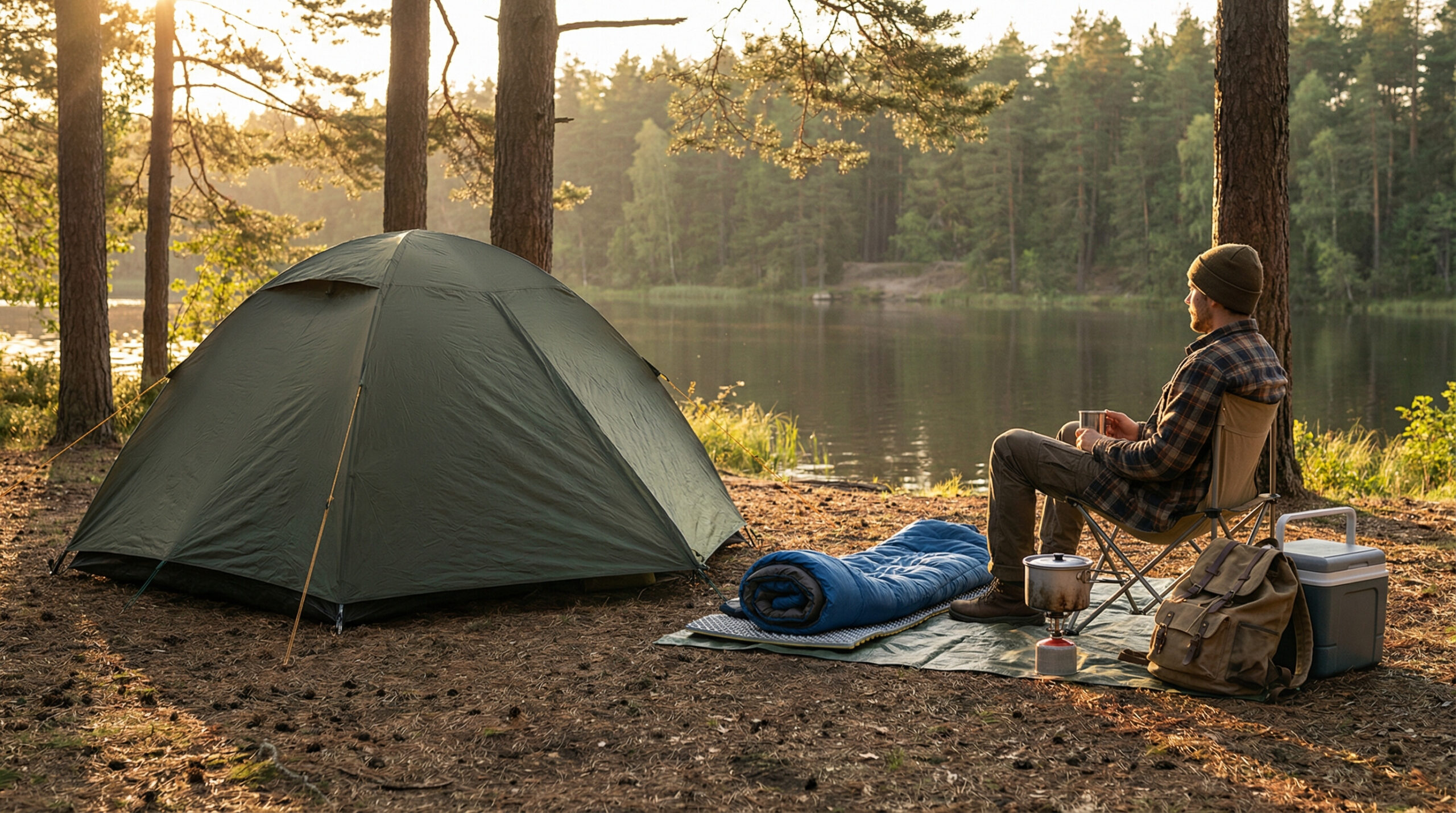
- Entry-level dome tent (weather-appropriate)
- Sleeping bag rated for expected temperatures
- Foam or basic inflatable sleeping pad
A sleeping pad is especially important. It adds insulation and dramatically improves comfort.
You can often borrow a tent or sleeping bag from a friend for your first trip — a smart way to test camping before investing.
? Cooking & Food
Keep meals simple and equipment minimal.
What you need:
- Single-burner camp stove or access to a campground grill
- Basic pot or pan
- Cooler with ice packs
- Refillable water container
- Simple utensils
You don’t need elaborate camp cooking gear. One-pot meals and easy breakfasts work perfectly.
For simple meal ideas, see Easy Camping Meal Ideas for Beginners.
? Clothing
You likely already own most of what you need.
Bring:
- Moisture-wicking base layer
- Warm mid-layer (fleece or insulated jacket)
- Rain jacket
- Extra socks
- Comfortable sleepwear
Avoid packing multiple outfit changes. Choose layers that work together.
If you’re camping in cooler weather, review Cold-Weather Camping: Gear & Safety Basics before heading out.
? Safety Basics
Safety doesn’t require expensive equipment — just preparation.
Bring:
- Basic first-aid kit
- Flashlight or headlamp
- Phone and backup battery pack
- Campground reservation info or offline map
For more details, read Camping Safety & Comfort Tips for Beginners.
Where to Save — and Where Not to Save
Being budget-conscious is smart. But there are places you shouldn’t go ultra-cheap.
✅ Safe to Go Budget:
- Camp chair
- Cookware
- Storage bins
- Accessories
- Utensils
⚠️ Don’t Go Ultra-Cheap:
- Tent (weather protection matters)
- Sleeping bag (temperature rating matters)
- Sleeping pad (comfort + insulation)
A miserable night’s sleep can ruin your trip — and discourage you from camping again. Prioritize sleep and shelter.
What Does a Beginner Budget Setup Cost?
Costs vary depending on what you already own and whether you borrow gear.
If borrowing some items:
You may start for around $100–$250.
If purchasing a basic starter setup:
Expect roughly $250–$500 for a reliable, no-frills setup.
You can always upgrade later — once you know what you truly value.
For specific beginner-friendly gear recommendations, check out this complete Beginner Camping Gear List.
The Smart Beginner Formula
Start small.
Camp close to home.
Keep it simple.
Upgrade gradually.
Plan a one-night trip before committing to longer adventures. Learn what you actually use — and what stays packed away.
And if you want a streamlined packing reference, download the First-Time Camping Checklist: What You Actually Need to stay organized.
Camping doesn’t have to strain your budget.
It just requires thoughtful preparation.