

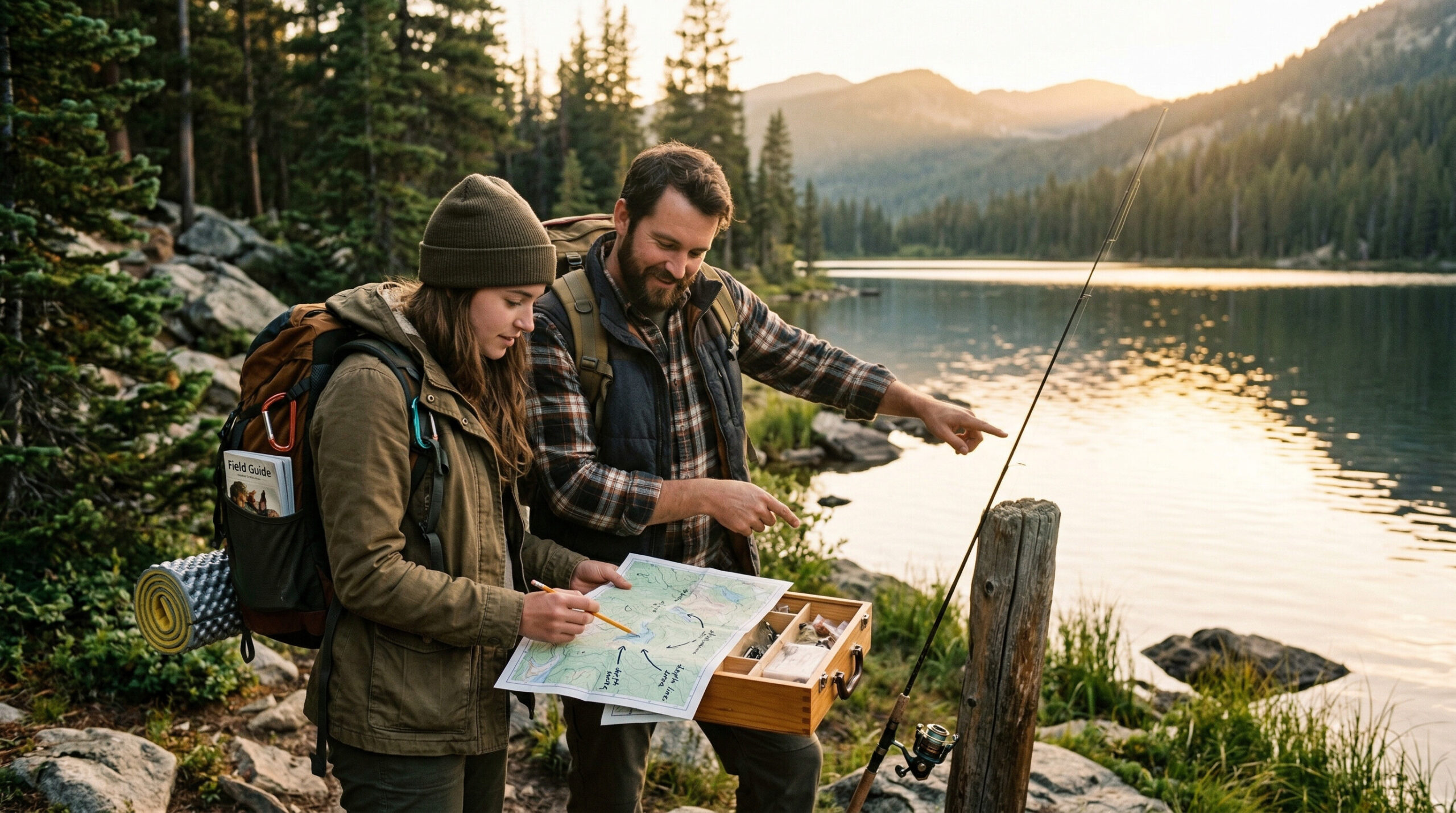
Choosing the right fishing location is one of the most important factors for beginner anglers. Even with proper gear and technique, fishing in areas where fish are scarce can make the experience frustrating.
Recreational fishing guidance from agencies such as the U.S. Fish and Wildlife Service emphasizes that beginners often have the most success when starting at accessible, well-known fishing locations that support healthy fish populations.
Understanding a few key factors—such as water type, fish habitat, and accessibility—can help new anglers find productive fishing spots.
Start With Public Fishing Areas
Public fishing locations are often designed to provide easy access for anglers and may include maintained shorelines, docks, or fishing piers.
Common beginner-friendly locations include:
- Community lakes and ponds
- State parks with fishing access
- Public reservoirs
- Fishing piers or docks
Many public waters are regularly stocked with fish through state wildlife programs to support recreational fishing opportunities.
Look for Fish Habitat
Fish tend to gather in areas that provide food, shelter, and protection. Even in small lakes or ponds, fish are rarely evenly distributed throughout the water.
Common fish habitats include:
- Fallen trees or submerged logs
- Weed beds or aquatic vegetation
- Docks and boat ramps
- Rocks or underwater structures
- Areas where shallow water meets deeper water
These locations provide shelter from predators and access to food sources.
Consider Accessibility for Beginners
Beginner anglers often benefit from locations that are easy to reach and fish safely.
Helpful features may include:
- Clear walking paths to the water
- Stable shorelines or fishing platforms
- Designated fishing docks or piers
- Parking areas nearby
These features allow beginners to focus on learning fishing techniques rather than navigating difficult terrain.
If you’re new to the sport, start with our Beginner Fishing Guide: How to Start Fishing for an overview of gear, techniques, and fishing basics.
Check Local Fish Stocking Programs
Many state wildlife agencies stock lakes and ponds with fish species such as trout, bass, or catfish to support recreational fishing.
Stocked waters can provide higher chances of catching fish, especially for beginners learning basic techniques.
Information about stocked fishing locations is often available through state fish and wildlife departments or resources from the U.S. Fish and Wildlife Service.
Pay Attention to Time and Conditions
Fish behavior can vary depending on environmental conditions such as temperature, light, and weather patterns.
Many freshwater fish species tend to be more active during:
- Early morning
- Late afternoon or evening
Weather conditions monitored by agencies like the National Oceanic and Atmospheric Administration can also influence fishing conditions.
For example, cloudy conditions sometimes increase fish activity because lower light levels make fish more comfortable feeding near the surface.
Start With Simple Fishing Methods
When fishing at beginner locations, simple techniques often work best.
Many beginners start with:
- Bobber fishing with live bait
- Basic casting with simple lures
- Shore fishing from docks or banks
You can learn which gear works best for these techniques in Beginner Fishing Gear: What You Actually Need.
Practice Responsible Fishing
Fishing responsibly helps protect aquatic ecosystems and maintain healthy fish populations.
Organizations such as the American Sportfishing Association encourage anglers to follow conservation practices such as:
- Following local fishing regulations
- Respecting catch limits
- Disposing of fishing line properly
- Avoiding damage to aquatic habitats
Responsible fishing ensures these locations remain productive for future anglers.
Final Thoughts
Finding a good fishing location can make a significant difference for beginners learning the basics of the sport. Starting with accessible public waters, focusing on areas where fish naturally gather, and choosing simple techniques can improve the overall fishing experience.
As anglers gain experience, they often explore new environments such as rivers, larger lakes, or coastal waters.
With patience and practice, beginners can gradually develop the knowledge needed to identify productive fishing spots in a variety of locations.
About the Author
Randy Hartman is the creator of OutdoorDaze, a website focused on practical outdoor education for beginners. His guides emphasize preparation, safety awareness, and realistic approaches to hiking, camping, fishing, and motorcycle touring.