

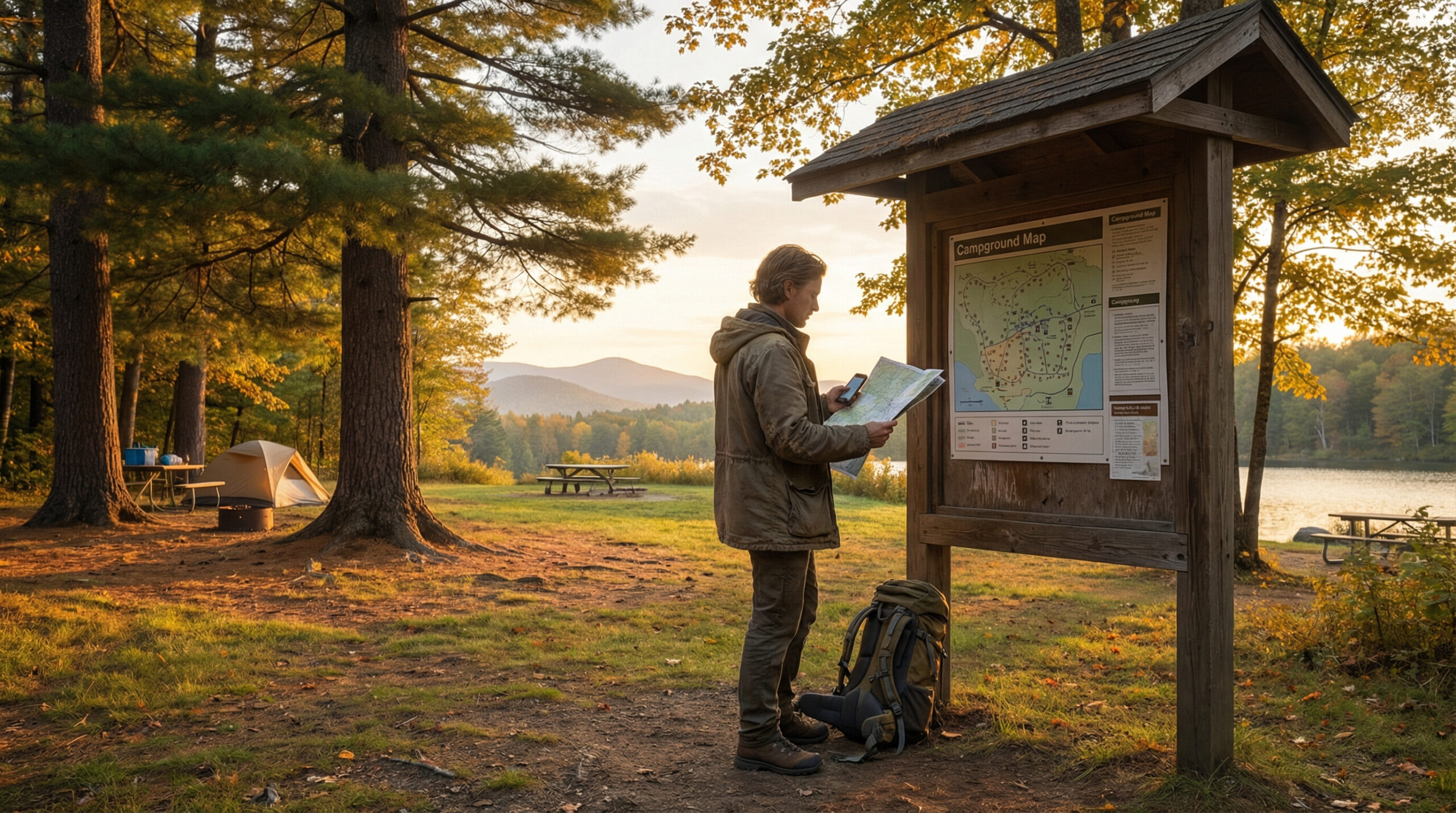
Choosing the wrong campground can turn an exciting first camping trip into a stressful one.
Too far from home.
Too crowded.
Too primitive.
Too complicated.
But choosing the right campground? That sets the tone for everything else.
If this is your first tent camping trip, you don’t need the most remote wilderness experience. You need a campground that makes learning easy and enjoyable.
Here’s exactly how to choose the right campground — step by step.
New to camping? Start with the Beginner Camping Guide to learn the basics before planning your first trip.
1. Start Close to Home (1–2 Hours Is Ideal)
For your first trip, distance matters more than scenery.
A campground within 1–2 hours of home gives you:
- Flexibility if something goes wrong
- Less driving fatigue
- An easier setup window before dark
- The option to leave early if needed
Long travel days add pressure. And pressure adds stress.
Your first trip is about learning — not proving something.
Keep it simple. Stay close.
2. Understand the Different Types of Campgrounds
Not all campgrounds are the same. Some are beginner-friendly. Others are better suited for experienced campers.
Here’s the breakdown:
Public Campgrounds (Great for Beginners)
These include:
- State parks
- National parks
- National forests
- Army Corps of Engineers campgrounds
Why they’re good for first-timers:
- Clearly marked campsites
- Basic amenities (restrooms, water)
- Staff or hosts often on-site
- Established reservation systems
They strike a great balance between comfort and nature.
Private Campgrounds
These include:
- Family-owned campgrounds
- RV parks
- Larger chain-style campgrounds
Pros:
- Often have showers
- May include camp stores
- More structured layouts
Cons:
- Can feel crowded
- Often RV-heavy
- Less “natural” atmosphere
They’re fine for beginners — just know the vibe can feel more like a park than a wilderness experience.
3. Look for Beginner-Friendly Amenities
Amenities can dramatically affect your first experience.
Here’s what to prioritize:
Restrooms
Flush toilets are ideal for beginners. Vault toilets are common in more rustic campgrounds but can feel intimidating if you’ve never used one.
Potable Water
Look for campgrounds with accessible drinking water spigots. Hauling in all your water adds complexity you don’t need yet.
Showers (Optional but Helpful)
Not essential for a short trip — but some beginners feel more comfortable knowing they’re available.
Camp Host or Ranger Presence
This adds peace of mind. If you have questions, someone is nearby.
You don’t need luxury. You need support and simplicity.
4. Pay Attention to Campsite Layout
Not all sites within a campground are equal.
When reserving or reviewing site maps, consider:
- Proximity to restrooms (close — but not too close)
- Distance from playgrounds or high-traffic areas
- Shade vs full sun
- Site size (make sure it fits your tent)
- Level ground for sleeping
A quiet, level site makes a massive difference in sleep quality and overall enjoyment.
If site photos are available online, use them.
5. Read Reviews — But Read Them Strategically
Reviews can be helpful — but only if you interpret them correctly.
Look for patterns, not isolated complaints.
For example:
If multiple reviews mention:
- Clean facilities
- Friendly hosts
- Quiet hours enforced
That’s meaningful.
But a single one-star review about “too many bugs” in the middle of summer? That’s camping.
Focus on consistent themes, not emotional reactions.
6. Check Reservation Requirements
Some campgrounds are:
- First-come, first-served
- Fully reservable
- A mix of both
For your first trip, reservable campgrounds reduce uncertainty.
You’ll know:
- Your site is secured
- Your arrival window
- What amenities are available
Avoid holiday weekends for your first trip if possible. Crowds add pressure and limit flexibility.
7. Avoid Dispersed Camping (For Now)
Dispersed camping means camping outside established campgrounds — typically in national forests or BLM land.
It often includes:
- No restrooms
- No water
- No marked sites
- No reservations
While it can be rewarding, it’s better suited for campers with more experience.
Your first trip should teach you the basics:
- Setting up a tent
- Managing food
- Sleeping outdoors
- Packing efficiently
You can explore more remote options later.
Final Thoughts: Your First Campground Doesn’t Need to Be Perfect
It needs to be manageable.
Choose:
- Close to home
- Established campground
- Basic amenities
- Reservable site
- Moderate crowd levels
Camping confidence grows with successful trips.
Your goal isn’t to find the most beautiful campground in America.
It’s to choose one that makes learning easy.
Ready to Plan the Rest of Your Trip?
If you haven’t already, check out:
- How to Plan Your First Tent Camping Trip
- 7 Mistakes First-Time Tent Campers Make
- The Only Tent Camping Gear Beginners Actually Need
And if you want to make packing easier, download the free Camping Checklist before your trip.
Simple planning leads to better experiences.
Start manageable. Learn as you go. And enjoy the process.