

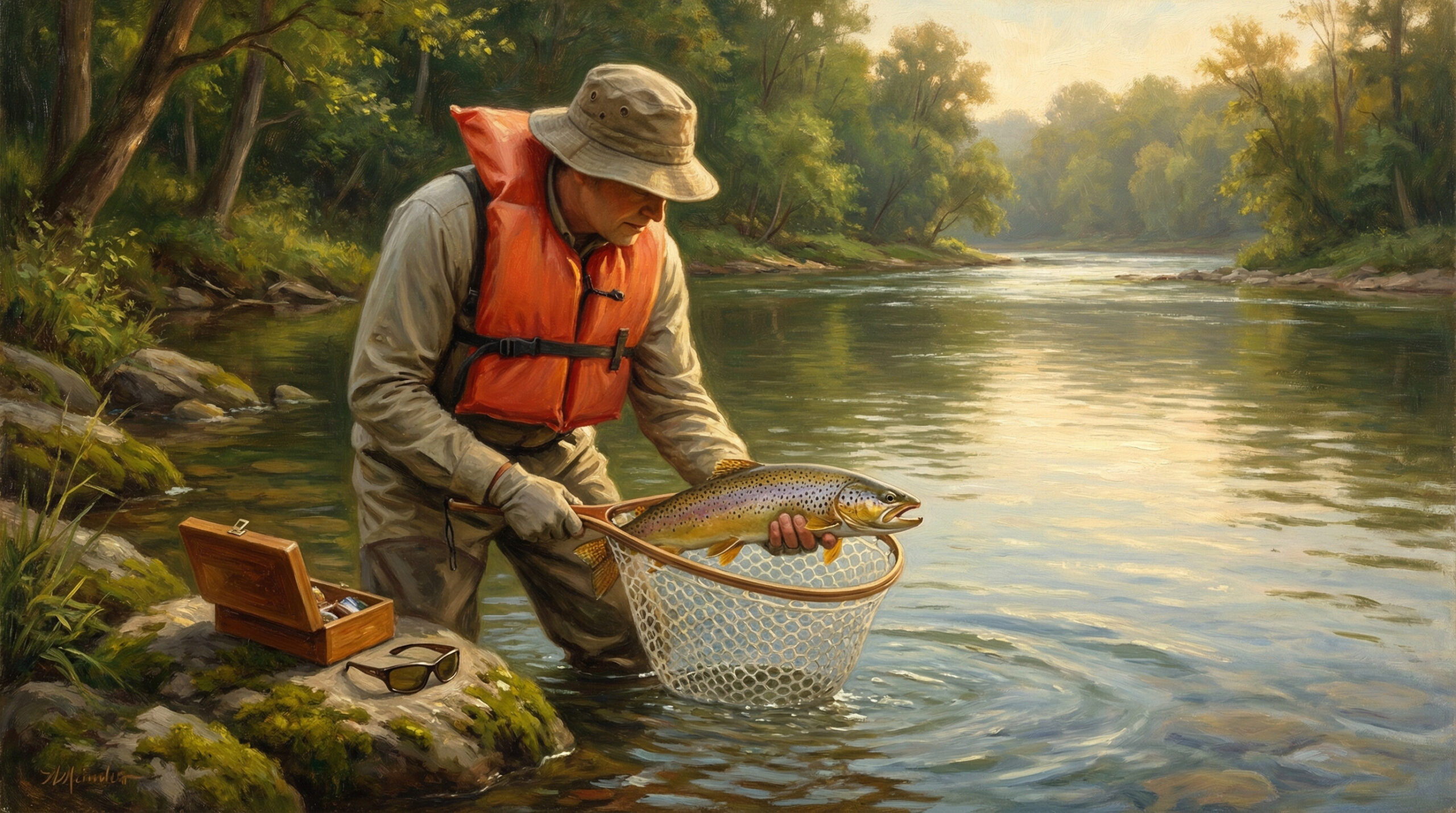
How to Stay Safe, Protect Wildlife, and Fish Responsibly
Fishing is rewarding, but it comes with responsibilities. Safety and conservation aren’t optional — they’re essential for long-term enjoyment and protecting the ecosystems that make fishing possible.
This guide covers practical safety tips, ethical practices, and conservation strategies for freshwater anglers of all skill levels.
1. Personal Safety on the Water
Even calm freshwater environments present hazards.
Key Safety Practices
- Always wear a personal flotation device (PFD) in boats or near deep water
- Check weather before leaving; avoid storms or high winds
- Keep a first aid kit and know basic first aid
- Bring sufficient water, snacks, and sun protection
Boat and Shore Safety
- Don’t overload boats; distribute weight evenly
- Use non-slip footwear
- Watch for slippery rocks or steep banks
2. Safe Handling of Gear
Sharp hooks, knives, and lines can cause injury.
Preventing Injuries
- Keep hooks covered when not in use
- Store knives safely
- Handle lines carefully; avoid tangles or snags
Protective Gear
- Polarized sunglasses protect eyes from hooks and glare
- Gloves can prevent cuts and improve grip
3. Catch-and-Release Best Practices
Catch-and-release maintains healthy fish populations.
Handling Guidelines
- Wet hands before touching fish
- Minimize air exposure
- Remove hooks gently, using pliers if needed
- Release fish quickly and revive them before letting go
Even small improvements in handling increase survival rates dramatically.
4. Conservation-Oriented Fishing Practices
Responsible anglers leave no trace.
Key Practices
- Pack out all trash and fishing line
- Respect posted regulations and seasonal closures
- Avoid overfishing or targeting vulnerable species
- Use barbless hooks if appropriate
Habitat Awareness
- Avoid trampling vegetation near banks
- Minimize disturbance to spawning areas
- Respect wildlife and natural buffers
5. Environmental Awareness
Water quality and ecosystem health affect your success.
- Monitor for algae blooms or pollution warnings
- Avoid using harmful chemicals or bait
- Report hazards or illegal activity to local authorities
Protecting the environment ensures fishing remains sustainable and enjoyable.
6. Emergency Preparedness
Be ready for the unexpected.
Common Fishing Emergencies
- Slips, falls, or cuts
- Sunburn or dehydration
- Sudden storms or hypothermia (cold water)
Preparation
- Carry a whistle or signaling device
- Keep a waterproof first aid kit
- Know emergency contacts for your area
Preparation is the difference between a minor mishap and a major problem.
Fishing Safety & Conservation Checklist
Before Fishing
- Check weather and water conditions
- Wear PFD if needed
- Pack a first aid kit and safety gear
- Review local fishing regulations
During Fishing
- Handle fish responsibly
- Keep yourself and others safe around gear
- Monitor hydration and sun exposure
- Respect habitat and wildlife
After Fishing
- Remove all gear and trash
- Properly store tackle and lines
- Document any unusual hazards or wildlife sightings
Final Thoughts
Safety and conservation aren’t separate from fishing — they are what make it sustainable, enjoyable, and rewarding. By following smart practices, you protect yourself, the fish, and the environment, ensuring that the next generation of anglers can enjoy the same experiences you do.