

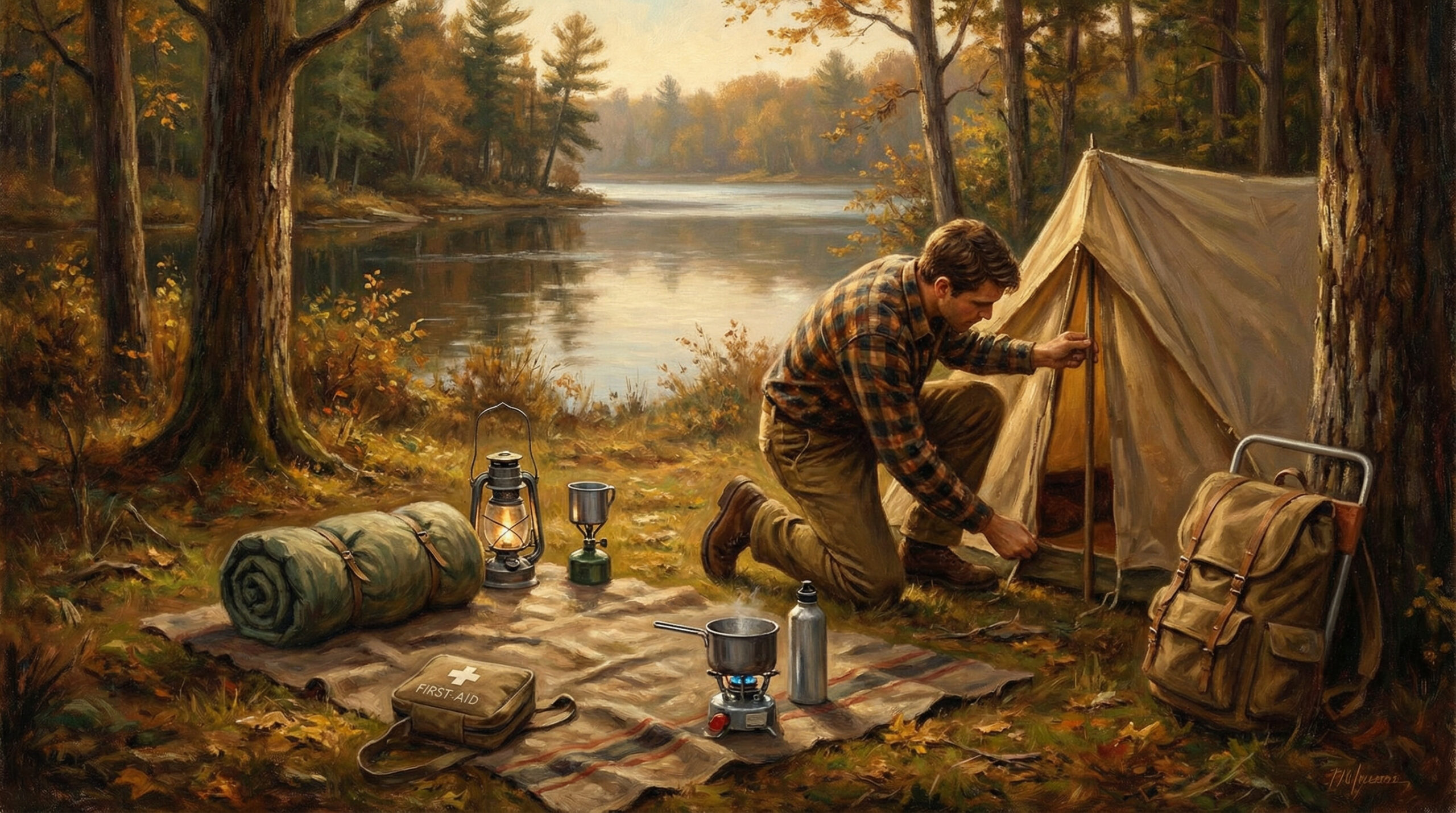
Camping for the first time can feel overwhelming, but having a practical checklist ensures you bring the right gear and stay safe. This checklist focuses on what matters most for beginner campers, based on guidance from the National Park Service, the Leave No Trace Center for Outdoor Ethics, and the American Camping Association.
New to camping? Start with the Beginner Camping Guide to learn the basics before planning your first trip.
Shelter & Sleep
- Tent with rainfly
- Tent stakes and mallet/hammer
- Ground tarp or footprint
- Sleeping bag rated for expected temperatures
- Sleeping pad or lightweight air mattress
- Pillow or travel pillow (optional)
Tip: Test your tent setup at home before your first trip to reduce stress at the campsite.
For full guidance on selecting your tent and sleeping gear, see Beginner Camping Essentials: What Matters and What Doesn’t.
Clothing & Weather Prep
- Moisture-wicking base layers
- Insulating mid-layer (fleece or lightweight down)
- Waterproof and windproof jacket
- Extra socks and underwear
- Hat and gloves for cold weather
- Sun hat or cap
- Rain gear (poncho or rain jacket/pants)
Layering helps beginners adapt to unexpected weather changes, as recommended by the National Park Service.
Food & Hydration
- Water bottles or hydration bladder (2L per person minimum)
- Snacks (trail mix, energy bars)
- Meals (pre-made, easy-to-cook options)
- Cooking equipment (portable stove or campfire gear, where allowed)
- Eating utensils, plates, or bowls
- Trash bags for waste
See Beginner Camping Essentials for tips on meal planning and portable cooking gear.
Safety & Navigation
- First aid kit (bandages, antiseptic, personal medications)
- Flashlight or headlamp with extra batteries
- Map of the area and/or GPS device
- Compass
- Whistle or signaling device
Public land agencies recommend carrying basic safety and navigation items even on well-marked beginner trails.
Optional Comfort Items
- Camping chair or portable seating
- Small folding table
- Insect repellant
- Sunscreen
- Lightweight multi-tool or knife
Tip: These items improve comfort but are secondary to safety and shelter.
Environmental Responsibility
- Pack out all trash and food waste
- Stay on designated campsites and trails
- Avoid disturbing wildlife
- Use Leave No Trace principles whenever possible
Learn more in the Beginner Camping Essentials guide.
Quick Checklist Table
| Category | Essential Items | Optional Items |
|---|---|---|
| Shelter & Sleep | Tent, stakes, sleeping bag, sleeping pad | Pillow |
| Clothing | Base layer, insulating layer, rain gear | Sun hat, gloves |
| Food & Hydration | Water, snacks, meals, utensils | None |
| Safety & Navigation | First aid kit, flashlight, map, compass, whistle | Multi-tool |
| Comfort | N/A | Camping chair, small table, sunscreen, insect repellent |
Key Takeaways
- Focus on essentials first: shelter, sleep, hydration, and clothing.
- Pack safety and navigation items for every trip.
- Optional comfort items can be added once you’re familiar with camping.
- Always follow Leave No Trace principles to minimize environmental impact.
About the Author
Randy Hartman is the creator of OutdoorDaze, a website providing practical, evidence-backed outdoor guides for beginners. His advice emphasizes preparation, safety, and realistic experiences for camping, hiking, fishing, and motorcycle touring.