

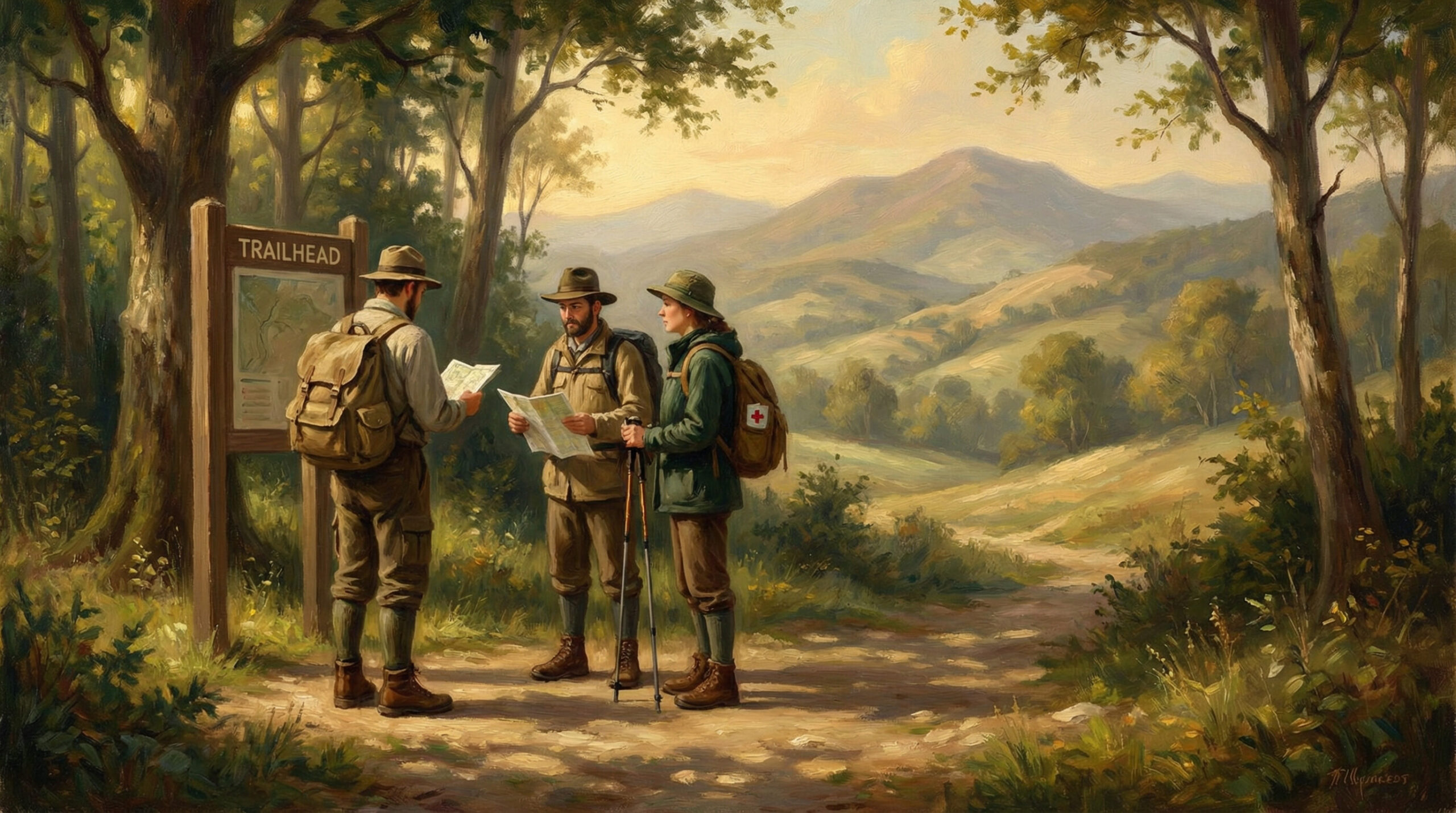
What to Bring, How to Prepare, and How to Stay Safe on the Trail
Day hiking is one of the most accessible ways to explore the outdoors. No overnight gear. No complex logistics. Just you, the trail, and a few hours of movement and perspective.
But “just a day hike” is where many preventable mistakes happen.
Weather shifts. Trails get confusing. Injuries occur. And unprepared hikers quickly discover that short trips can become long ones.
This guide covers the true essentials — not the overpacked fantasy list or the minimalist gamble — but the balanced, safety-focused middle ground.
New to hiking? Start with the Beginner Hiking Guide to learn the basics before choosing your first trail.
1. Plan Before You Lace Up
Most hiking problems begin before the trailhead.
Research the Trail
- Distance and elevation gain
- Estimated time (then add margin)
- Terrain type (rocky, exposed, shaded)
- Water availability
Check Conditions
- Weather forecast (including wind)
- Seasonal hazards (snow, heat, mud)
- Trail closures or wildlife alerts
Tell Someone Your Plan
Share:
- Trail name
- Start time
- Expected return time
Simple. Powerful. Often ignored.
2. The Core Day Hiking Essentials
There’s a reason experienced hikers rely on a core system.
The 10 Essentials (Modern Interpretation)
- Navigation – Map, compass, GPS
- Sun Protection – Hat, sunglasses, sunscreen
- Insulation – Extra layer (even in summer)
- Illumination – Headlamp or flashlight
- First Aid – Small, practical kit
- Fire – Lighter or fire starter
- Repair Kit & Tools – Multi-tool, duct tape
- Nutrition – Extra food
- Hydration – Water + purification option
- Emergency Shelter – Lightweight bivy or emergency blanket
You may not use these on every hike. But when you need them, you really need them.
3. Footwear and Clothing Matter More Than Gadgets
Comfort and injury prevention start with the basics.
Footwear
- Trail runners or hiking boots with traction
- Broken in — never brand new
- Appropriate for terrain
Clothing Strategy
- Moisture-wicking base layers
- Avoid cotton
- Lightweight rain jacket when weather is uncertain
Blisters and overheating ruin hikes faster than a lack of gear.
4. Hydration Strategy
Dehydration sneaks up quietly.
General Rule
- ½ liter of water per hour (more in heat)
- Carry more than you think you need
If hiking longer or in remote areas:
- Bring a water filter or purification tablets
5. Pace and Energy Management
New hikers often burn out early.
Smart Pacing
- Start slower than you feel capable of
- Take short breaks before exhaustion
- Eat small snacks regularly
Energy management prevents mistakes late in the hike.
6. Trail Awareness and Safety
Situational awareness keeps minor issues small.
Watch For:
- Changing weather
- Trail markers fading
- Loose rock or unstable footing
- Wildlife activity
Stay present. Distraction leads to injury.
7. When to Turn Around
One of the most important hiking skills is restraint.
Turn back if:
- Weather shifts dramatically
- Daylight runs short
- You’re unsure of the route
- Fatigue compromises footing
The summit is optional. Getting home safely isn’t.
8. Hiking Solo vs With Others
Each comes with different safety considerations.
Solo Hiking
- Share your plan
- Be conservative with risk
- Carry emergency communication if remote
Group Hiking
- Set a comfortable pace for the slowest member
- Regroup frequently
- Avoid splitting up casually
Day Hiking Essentials Checklist
Before the Hike
- Trail researched
- Weather checked
- Plan shared with someone
- Essentials packed
On the Trail
- Maintain steady pace
- Hydrate consistently
- Monitor weather and time
- Stay on marked routes
Emergency Ready
- Extra layer accessible
- Headlamp packed
- Basic first aid available
- Navigation tools on hand
Final Thoughts
Day hiking feels simple — and that’s part of its beauty. But simplicity shouldn’t mean complacency. A few intentional habits dramatically increase safety and enjoyment on the trail.
Preparation doesn’t complicate hiking.
It protects the freedom that makes it worthwhile.