

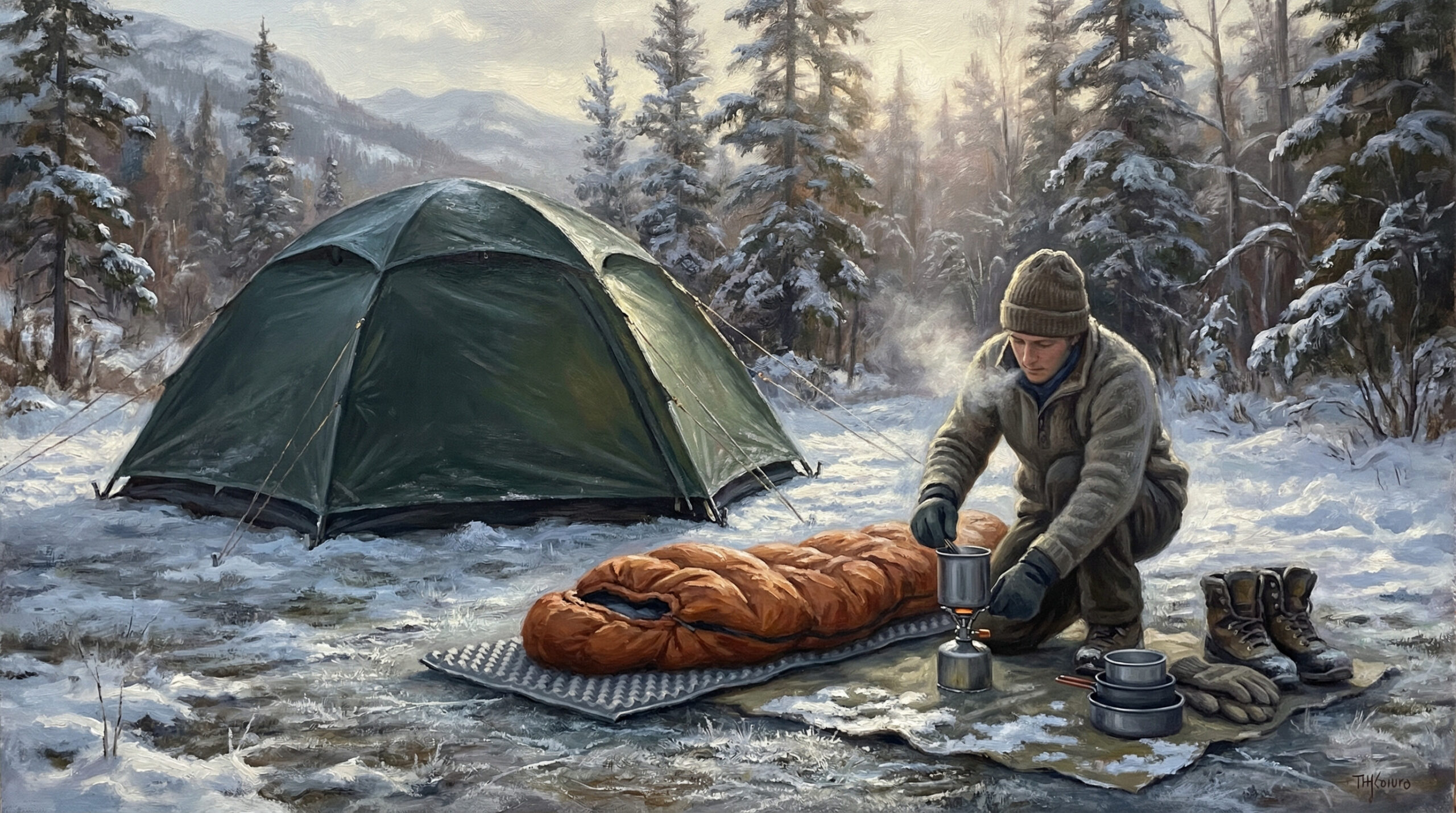
Cold-weather camping offers quieter campsites, fewer bugs, and some of the most memorable outdoor experiences—but it also demands more preparation than camping in warm conditions. When temperatures drop, small mistakes can quickly turn an enjoyable trip into an uncomfortable or even unsafe one.
New to camping? Start with the Beginner Camping Guide to learn the basics before planning your first trip.
What Counts as Cold-Weather Camping?
This guide breaks down the essential gear and safety practices for cold-weather camping, focusing on what really matters. You don’t need expedition-level equipment or extreme survival skills—just the right sleeping system, layering, and planning habits to stay warm, dry, and comfortable in colder conditions.
Cold-weather camping doesn’t have to mean deep winter or snowstorms.
For most campers, this guide applies when:
- Nighttime temperatures drop below 40°F (4°C)
- Conditions include cold rain, wind, or frost
- Shoulder seasons (late fall, early spring) are in play
Cold becomes a factor when staying warm and dry requires intention, not luck.
1. Your Sleep System Matters More Than Anything Else
If you get this wrong, nothing else will save the trip.
Your sleep system matters most — see recommended beginner gear here.
Sleeping Bag
Choose a sleeping bag rated at least 10–15°F colder than the expected overnight low.
Important notes:
- Temperature ratings are survival-based, not comfort-based
- Down bags are lighter and warmer, but must stay dry
- Synthetic bags handle moisture better, but pack larger items
Sleeping Pad (Often Overlooked)
Your sleeping pad is insulation—not just cushioning.
Look for:
- R-value of 4 or higher for cold conditions
- Thicker pads for comfort and warmth
- Foam + inflatable combo for extreme cold (optional)
💡 Cold ground will drain body heat faster than cold air.
Cold-Weather Tip:
Staying warm starts with the right sleeping system. Our cold-weather camping gear checklist breaks down what actually matters when temperatures drop.
2. Clothing: Stay Warm by Managing Moisture
Cold camping is less about piling on layers and more about staying dry.
The Cold-Weather Layer System
- Base layer: Moisture-wicking (synthetic or wool)
- Mid layer: Insulation (fleece or puffy)
- Outer layer: Wind and weather protection
Key Rule
If you’re sweating, you’re overdressed.
Wet clothing in cold weather leads to rapid heat loss. Adjust layers early and often.
3. Shelter: Block Wind and Manage Condensation
Your tent doesn’t need to be heavy—but it does need to be reliable.
What to Look For
- Full rainfly that reaches the ground
- Good ventilation options
- Strong poles that handle wind
Condensation is normal in cold weather. To manage it:
- Vent when possible
- Avoid breathing directly into your sleeping bag
- Keep wet gear outside the tent when you can
Cold temperatures magnify small mistakes, especially when it comes to gear. You can review our cold-weather camping essentials to make sure your setup is warm, dry, and dependable.
4. Staying Warm at Camp (Without Overdoing It)
Once you stop moving, cold becomes noticeable fast.
Camp Warmth Essentials
- Insulated jacket (even in mild daytime temps)
- Warm hat and gloves
- Dry socks reserved for camp and sleeping
Small habits matter:
- Change out of damp clothes immediately
- Eat a warm meal before bed
- Keep tomorrow’s clothes inside your sleeping bag overnight
5. Food and Hydration in Cold Conditions
Cold suppresses thirst, but dehydration still happens.
Hydration Tips
- Drink regularly, even if you’re not thirsty
- Insulate water bottles or store them upside down
- Avoid letting filters freeze (keep them in your bag)
Food Tips
- Favor calorie-dense meals
- Warm food boosts morale and body heat
- Eat before bed to help fuel overnight warmth
6. Fire and Cooking Safety
Fire can be helpful—but it’s not guaranteed.
Cold-weather considerations:
- Wet or frozen wood is harder to light
- Wind reduces stove efficiency
- Always have a backup cooking method
Never rely on fire alone for warmth or survival.
7. Weather Awareness and Trip Planning
Cold weather reduces your margin for error.
Before leaving:
- Check the forecast closely
- Watch wind chill, not just temperature
- Know bailout points and turnaround times
Plan shorter days and earlier camp setup. Darkness comes sooner in cold seasons.
If you’re carrying your gear any distance, many of the principles behind hiking essentials that keep you comfortable on the trail apply directly to cold-weather camping.
Common Cold-Weather Camping Mistakes
- Underestimating nighttime temperatures
- Skipping a proper sleeping pad
- Wearing cotton clothing
- Letting gear get wet
- Pushing plans despite worsening weather
Cold-weather camping rewards preparation and punishes shortcuts.
Final Thoughts: Comfortable Beats Extreme
Cold-weather camping doesn’t need to be miserable or intimidating. With the right sleep system, smart layering, and realistic planning, it can be one of the most peaceful ways to experience the outdoors.
Start with manageable conditions. Learn what works for you. And remember—comfort and safety matter more than toughness.
Looking to camp comfortably in colder conditions? Browse our Camping Guides and Gear for practical tips and trusted recommendations.