

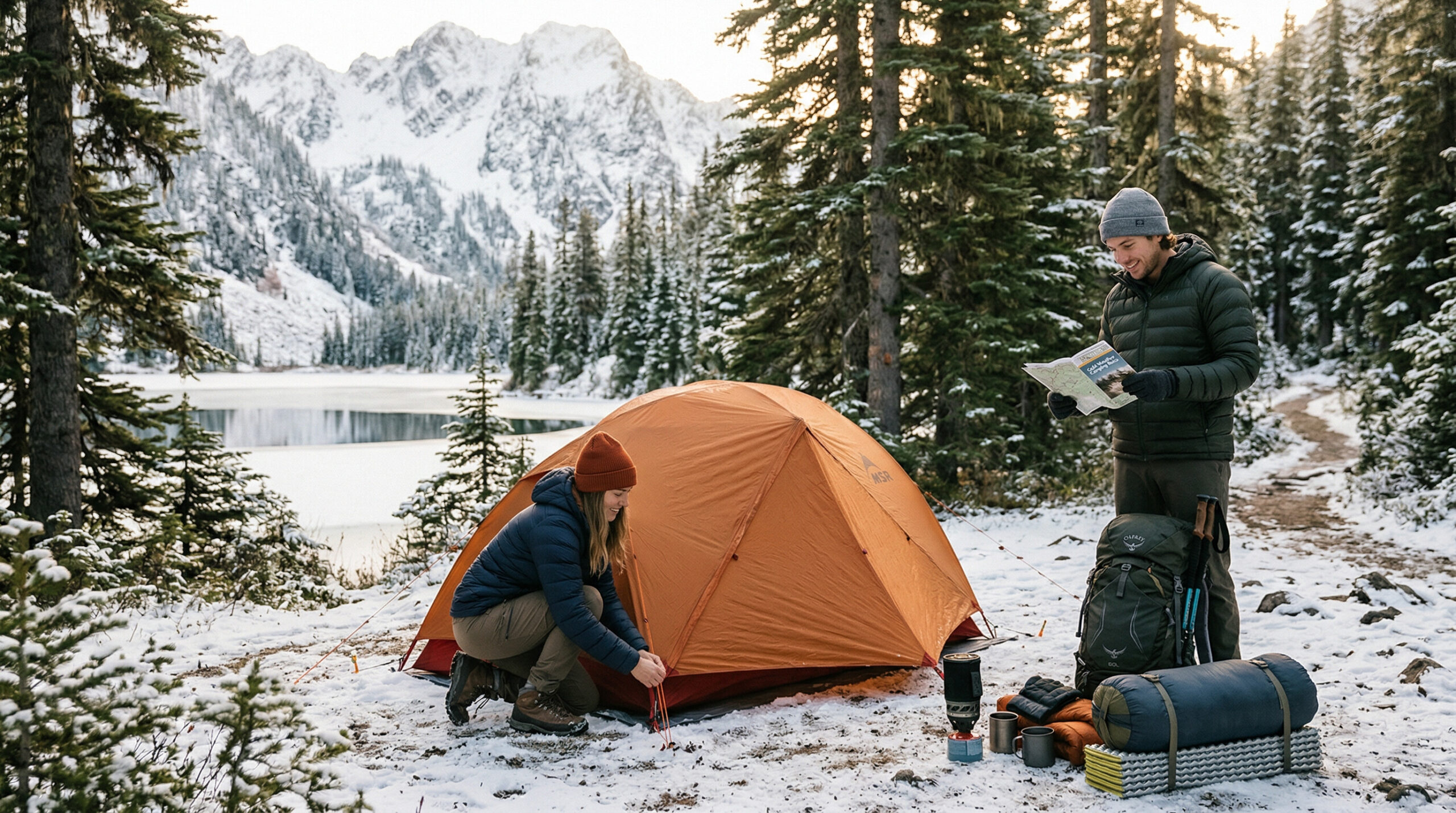
Camping in colder conditions requires additional preparation compared to warm-weather trips. Lower temperatures, wind, and moisture can affect comfort and safety if campers are not properly equipped.
Outdoor recreation guidance from organizations such as the National Park Service and the American Camping Association emphasizes that appropriate gear, layered clothing, and campsite planning are essential when camping in cold environments.
For beginners, understanding a few basic principles can make cold-weather camping safer and more enjoyable.
New to camping? Start with the Beginner Camping Guide to learn the basics before planning your first trip.
Understand Temperature Ratings
One of the most important factors in cold-weather camping is selecting gear designed for lower temperatures.
Sleeping bags are typically rated for specific temperature ranges. However, these ratings often indicate survival limits rather than comfort levels. Many outdoor educators recommend choosing a sleeping bag rated 10–20°F colder than the expected nighttime temperature for better comfort.
Sleeping pads are also important because they provide insulation from the cold ground.
Use Layered Clothing
Layering helps regulate body temperature in changing conditions.
A common cold-weather layering system includes:
- Base layer: Moisture-wicking clothing to keep skin dry
- Insulating layer: Fleece or insulated jacket to retain warmth
- Outer layer: Windproof and waterproof shell
Extra socks, gloves, and a warm hat can also help prevent heat loss. According to the National Park Service, significant body heat can be lost through exposed extremities in cold conditions.
Choose the Right Campsite
Campsite selection becomes especially important in colder weather.
Beginners should consider:
- Setting up camp away from strong winds when possible
- Avoiding low areas where cold air may settle
- Choosing flat, well-drained ground for sleeping
Using established campsites can also help minimize environmental impact and reduce the need for clearing vegetation.
Manage Moisture and Condensation
Moisture can significantly affect warmth during cold-weather camping.
Common ways to manage moisture include:
- Ventilating the tent when possible
- Avoid bringing wet clothing inside sleeping bags
- Storing gear in dry bags or waterproof containers
Keeping clothing and sleeping gear dry is one of the most effective ways to maintain warmth.
Prepare Warm Meals and Hot Drinks
Warm food and drinks can help maintain body temperature and provide energy during cold-weather trips.
Simple options often used by campers include:
- Hot soups or stews
- Oatmeal or warm breakfast foods
- Tea, coffee, or other warm beverages
Cooking with a portable stove is often recommended when campfires are restricted or impractical.
For a complete packing list, see our First-Time Camping Checklist.
Pack Additional Safety Items
Cold-weather trips may require additional safety considerations compared to mild conditions.
Some useful items include:
- Extra clothing layers
- Hand warmers
- Emergency blanket or bivy sack
- Backup lighting and batteries
You can also review the core gear recommendations in Beginner Camping Essentials: What Matters and What Doesn’t.
Follow Responsible Camping Practices
Cold-weather environments are often more sensitive to environmental damage.
The Leave No Trace Center for Outdoor Ethics encourages campers to follow responsible recreation practices such as:
- Packing out all trash
- Using established campsites
- Minimizing campfire impacts
- Respecting wildlife habitats
These practices help preserve outdoor environments for future visitors.
Final Thoughts
Cold-weather camping requires additional preparation, but it can be a rewarding outdoor experience when approached carefully.
Selecting temperature-appropriate gear, layering clothing, choosing a protected campsite, and managing moisture are key factors that contribute to safety and comfort.
Beginners often benefit from starting with short trips in mild cold conditions before attempting more challenging winter environments. With experience and preparation, cold-weather camping can become an enjoyable extension of outdoor recreation.
About the Author
Randy Hartman is the creator of OutdoorDaze, a website focused on practical outdoor education for beginners. His guides emphasize preparation, safety awareness, and realistic approaches to hiking, camping, fishing, and motorcycle touring.