

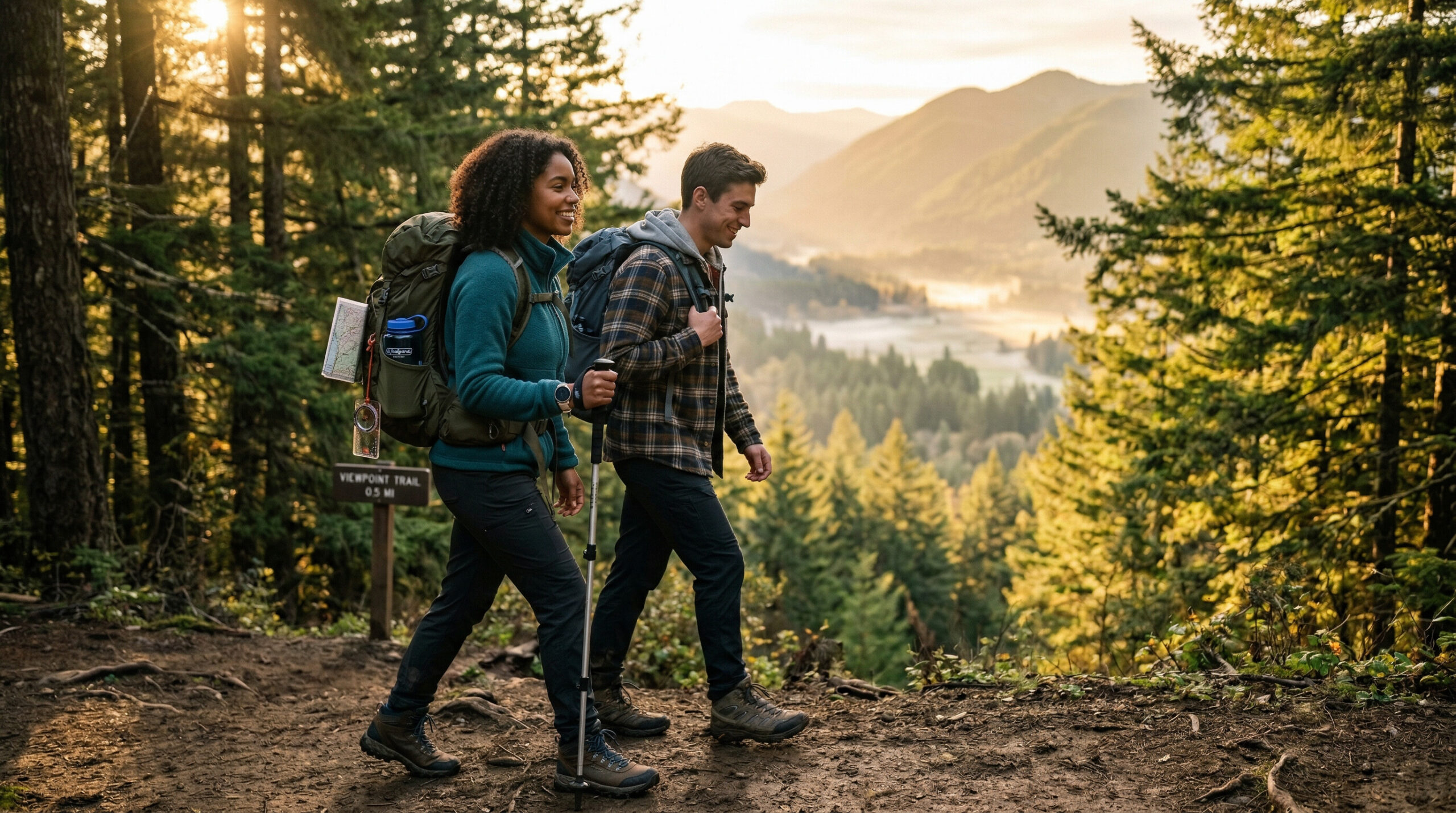
One of the most common questions new hikers ask is how much gear they need to get started. Outdoor retailers offer a wide range of specialized equipment, but beginners do not necessarily need expensive gear for short day hikes.
Outdoor recreation organizations such as the American Hiking Society emphasize preparation and safety rather than brand-specific equipment. For many beginner hikes, a small set of basic items is sufficient to help hikers stay comfortable and prepared.
This guide explains which gear is most useful for beginner hikers and how to approach gear selection with a practical budget.
New to hiking? Start with the Beginner Hiking Guide to learn the basics before choosing your first trail.
Start With the Hiking Essentials
Many outdoor educators recommend beginning with a basic safety framework known as the Ten Essentials. The Mountaineers originally developed this concept to help hikers prepare for unexpected conditions.
The Ten Essentials include categories such as:
- Navigation tools
- Sun protection
- Illumination
- First aid supplies
- Extra clothing layers
- Food and water
- Emergency shelter
For short, well-traveled trails, beginners may not need specialized equipment for every category. However, understanding these essentials helps hikers prepare appropriately for outdoor conditions.
Use the Day Hiking Checklist for Beginners as a reference.
Comfortable Footwear
Footwear is often the most important piece of hiking gear.
Trails frequently include uneven surfaces such as dirt, rocks, roots, and loose gravel. Shoes with adequate traction and support can improve stability and comfort during longer walks.
Many beginner hikers start with:
- Trail running shoes
- Lightweight hiking shoes
- Sturdy athletic shoes with good tread
The National Park Service encourages visitors to wear footwear appropriate for terrain and trail conditions.
Comfort and fit are usually more important than brand or price when selecting hiking footwear.
A Small Daypack
A small backpack allows hikers to carry water, food, and basic supplies comfortably.
Daypacks typically range from 10 to 25 liters, which provides enough space for essential gear without adding unnecessary weight.
Common items carried in a daypack include:
- Water bottles or hydration reservoir
- Snacks or meals
- Extra clothing layers
- Sunscreen and sun protection
- Basic first aid supplies
Using a backpack also helps distribute weight evenly while walking.
Water and Hydration
Staying hydrated is an important part of outdoor safety.
Water needs vary depending on temperature, trail difficulty, and physical activity levels. Outdoor safety guidance from agencies such as the National Park Service recommends bringing enough water for the duration of the hike and drinking regularly.
Many beginner hikers carry water using:
- Reusable water bottles
- Hydration reservoirs or bladder systems
For longer hikes or remote areas, some hikers also carry water filtration tools, although these are not always necessary for short day hikes.
Weather-Appropriate Clothing
Outdoor conditions can change quickly depending on elevation, weather systems, and seasonal conditions.
Layering clothing helps hikers adjust to temperature changes during a hike. A simple layering system often includes:
- A lightweight base layer
- An insulating layer, such as fleece
- A windproof or waterproof outer layer
Weather forecasts from the National Oceanic and Atmospheric Administration can help hikers plan appropriate clothing for expected conditions.
Packing an extra layer is commonly recommended, especially in cooler temperatures.
Select gear suited for the trail you plan to hike. Learn how in our guide to choosing your first hiking trail.
Navigation Tools
Even on well-marked trails, navigation tools can help hikers stay oriented.
Common navigation tools include:
- Printed trail maps
- GPS-enabled smartphones
- Trail guidebooks
- Compass
Many parks provide trail maps at visitor centers or trailheads. The National Park Service recommends carrying navigation information whenever traveling on trails.
Navigation tools become more important in remote areas or on complex trail networks.
Sun Protection
Sun exposure can affect hikers even on relatively short trips.
Outdoor safety guidance often recommends basic sun protection such as:
- Sunscreen
- Sunglasses
- Hats with brims
- Protective clothing
These items help reduce sun exposure, especially during hikes in open terrain or higher elevations.
Emergency and First Aid Supplies
Basic emergency supplies can help hikers manage minor injuries or unexpected delays.
Common beginner items include:
- Small first aid kit
- Headlamp or flashlight
- Multi-tool or knife
- Emergency blanket
These items are frequently included within the Ten Essentials framework used by many outdoor educators.
While beginners may not need advanced equipment for short hikes, having basic supplies can improve preparedness.
Buying Budget-Friendly Hiking Gear
Beginners can often start hiking without purchasing expensive equipment.
Some practical ways to keep costs lower include:
- Using existing athletic clothing and footwear
- Borrowing gear from friends or family
- Purchasing used outdoor equipment
- Starting with short day hikes before investing in additional gear
Outdoor recreation organizations frequently encourage beginners to focus on experience and preparation rather than equipment upgrades.
As hiking becomes a more regular activity, hikers can gradually upgrade gear based on personal preferences and trip requirements.
Final Thoughts
Getting started with hiking does not require a large investment in specialized gear. For many beginner trails, a small set of essential items—comfortable footwear, water, weather-appropriate clothing, and basic safety supplies—can provide sufficient preparation.
Learning how to select and pack these items is often more important than purchasing expensive equipment.
Over time, hikers can refine their gear choices as they gain experience and explore new environments.
About the Author
Randy Hartman is the creator of OutdoorDaze, a website focused on practical outdoor education for beginners. His guides emphasize preparation, safety awareness, and realistic approaches to hiking, camping, fishing, and motorcycle touring.