

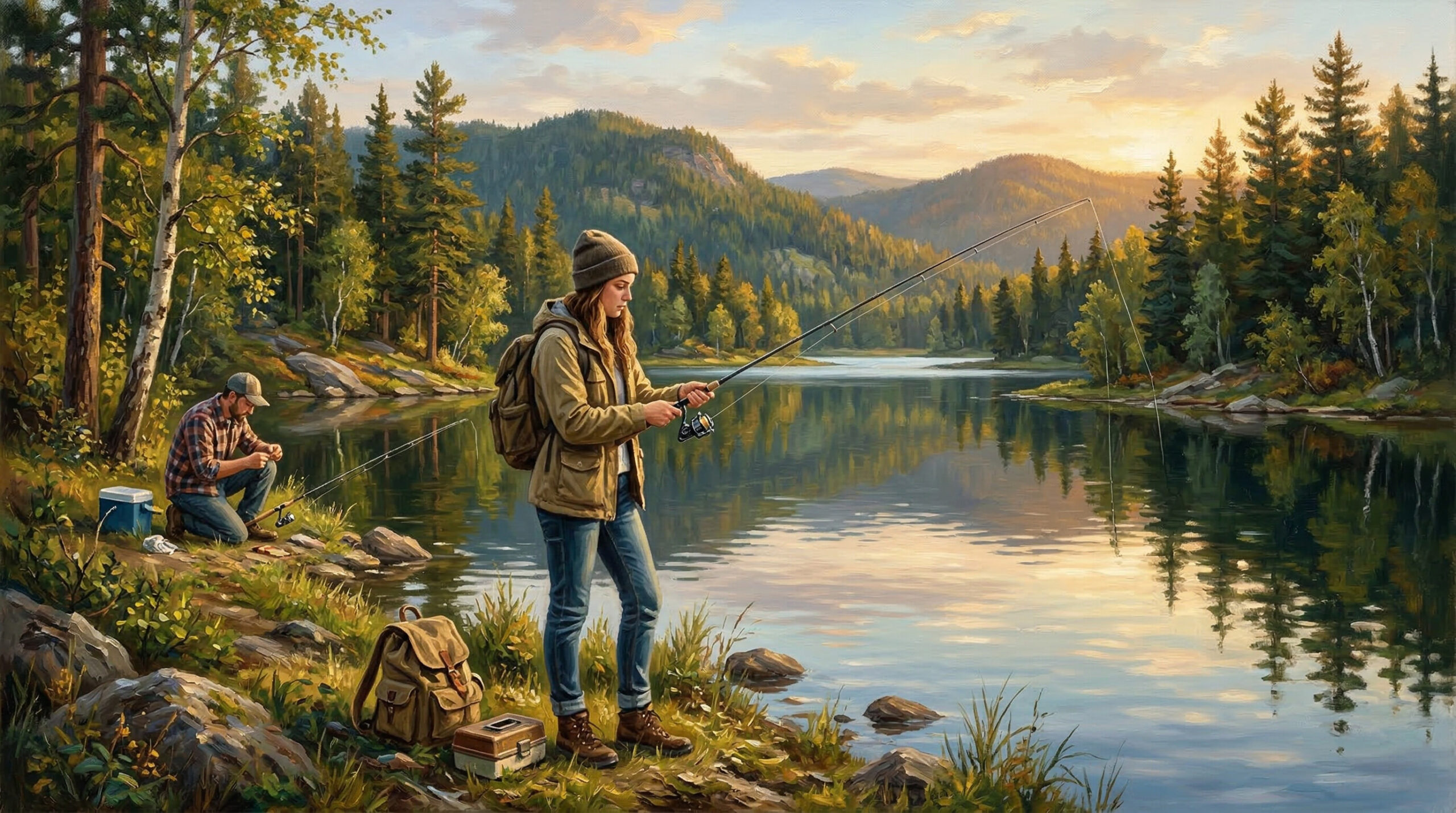
Fishing is one of the most widely practiced outdoor activities in the United States. According to participation data published by the U.S. Fish and Wildlife Service, millions of Americans participate in recreational fishing each year in freshwater lakes, rivers, and coastal waters.
For beginners, fishing can feel complicated because of the variety of equipment, species, and techniques involved. However, most new anglers can begin successfully with a small amount of gear and basic knowledge.
This guide introduces the fundamentals of fishing for beginners and connects you to OutdoorDaze resources designed to help new anglers get started.
What Beginners Should Know Before Fishing
Fishing regulations, locations, and equipment vary depending on region and species. Before fishing, beginners should research local rules and obtain any required fishing licenses.
State wildlife agencies regulate recreational fishing across the United States to manage fish populations and maintain sustainable fisheries.
Important beginner considerations include:
- obtaining a fishing license where required
- understanding local fishing regulations
- choosing beginner-friendly fishing locations
- learning basic casting and retrieval techniques
Many state agencies provide beginner resources and public fishing locations to help new anglers start safely and responsibly.
Essential Fishing Gear for Beginners
New anglers often assume they need extensive equipment. In reality, beginners can start fishing with only a few basic items.
Typical beginner fishing gear includes:
- a spinning rod and reel
- fishing line
- hooks and sinkers
- simple lures or live bait
- a small tackle box
For a full breakdown of beginner equipment, see:
Beginner Fishing Essentials: Gear, Basics, and What Actually Matters
This guide explains the basic gear needed to start fishing without unnecessary purchases.
Where Beginners Should Start Fishing
Location plays a major role in fishing success. Beginners often have the best results in easily accessible areas with healthy fish populations.
Common beginner-friendly locations include:
- local lakes or ponds
- public fishing piers
- slow-moving rivers or streams
- stocked fishing areas managed by wildlife agencies
Many public waters are maintained by agencies such as the U.S. Fish and Wildlife Service and state wildlife departments.
These areas often provide shoreline access designed for recreational anglers.
Basic Fishing Techniques for Beginners
Beginners typically start with simple techniques that are easy to learn and widely effective.
Common starter techniques include:
Still Fishing
Allowing bait or lures to remain stationary in the water.
Casting and Retrieving
Casting a lure and slowly retrieving it to attract fish.
Float Fishing
Using a bobber or float to suspend bait at a desired depth.
These techniques are commonly used by beginner anglers and can be effective in many freshwater environments.
Freshwater Fishing Basics: Techniques, Gear, and Species
Fishing Safety and Conservation
Fishing involves outdoor environments where safety and conservation practices are important.
Organizations such as the National Oceanic and Atmospheric Administration encourage responsible fishing practices to protect aquatic ecosystems.
Common recommendations include:
- following local fishing regulations
- practicing catch-and-release when appropriate
- disposing of fishing line properly
- maintaining awareness of weather conditions near water
Learning these practices helps protect both anglers and aquatic ecosystems.
Fishing Safety & Conservation Best Practices
Common Beginner Fishing Mistakes
New anglers sometimes experience frustration due to simple mistakes.
Common beginner challenges include:
- using overly complicated gear
- fishing in locations with low fish populations
- using bait that does not match local species
- fishing during poor weather or water conditions
Understanding these challenges can help beginners develop more effective fishing habits.
Building Fishing Skills Over Time
Fishing is a skill developed through practice and observation. Many anglers improve their success by gradually learning about:
- fish behavior and feeding patterns
- seasonal changes in fish activity
- different lure or bait presentations
Beginners who start with simple equipment and gradually experiment with techniques often build confidence and experience more quickly.
Related Beginner Fishing Resources
Explore these OutdoorDaze guides:
- Beginner Fishing Essentials: Gear, Basics, and What Actually Matters
- Freshwater Fishing Basics: Techniques, Gear, and Species
- Fishing Safety & Conservation Best Practices
These resources form the Beginner Fishing cluster on OutdoorDaze.
Final Thoughts
Fishing offers beginners an accessible way to spend time outdoors while learning practical skills related to water environments and wildlife.
With basic gear, knowledge of local regulations, and simple techniques, beginners can begin fishing successfully in many public waters across the United States.
The resources above provide a foundation for learning fishing fundamentals and developing skills over time.