

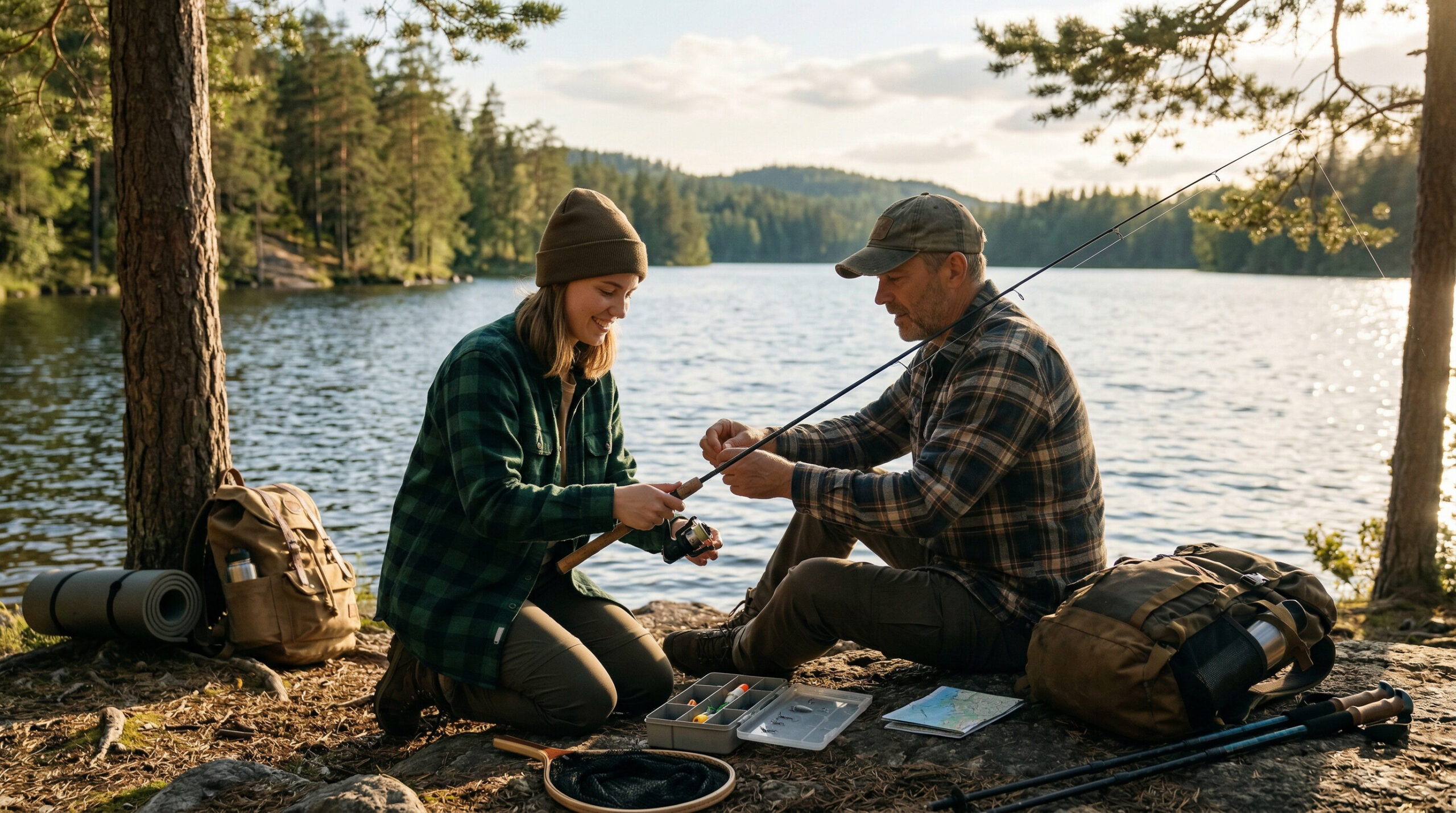
Fishing equipment can appear complicated when you first start learning about the sport. Many stores carry dozens of rod types, reel styles, lures, and accessories. However, beginners typically need only a small set of basic gear to start fishing successfully.
According to participation data from the U.S. Fish and Wildlife Service, millions of Americans begin fishing each year using simple setups designed for ease of use and versatility.
This guide explains the essential fishing gear beginners commonly use and what equipment can usually wait until later.
Fishing Rod and Reel
For most beginners, a spinning rod-and-reel combo is one of the easiest setups to learn. Spinning reels are designed to reduce tangles and allow beginners to practice casting without complicated adjustments.
Beginner-friendly rods typically fall in the following range:
- Length: 6–7 feet
- Power: Medium or medium-light
- Action: Moderate or fast
Many outdoor educators recommend purchasing a rod-and-reel combo, which comes pre-matched and ready to use.
If you’re just getting started, our Beginner Fishing Guide: How to Start Fishing explains how rods, reels, and basic techniques work together.
Fishing Line
Fishing line connects the rod and reel to the hook or lure.
Common beginner fishing lines include:
- Monofilament line – flexible and easy to use
- Fluorocarbon line – less visible underwater
- Braided line – strong but usually used by more experienced anglers
Many beginner anglers start with monofilament line in the 6–10 pound test range, which works well for common freshwater species.
Hooks
Hooks are used to attach bait and catch fish. They come in many sizes and styles, but beginners usually only need a few basic sizes.
Common beginner hook sizes include:
- Size 6
- Size 8
- Size 10
These sizes work well for smaller fish species such as sunfish, perch, and crappie.
Bobbers (Floats)
Bobbers help anglers detect when a fish bites. When a fish pulls on the bait, the bobber moves or dips below the water surface.
Bobbers are especially useful for beginners because they:
- Make bites easier to see
- Help control bait depth
- Simplify basic fishing techniques
Many beginner anglers learn bobber fishing as their first method.
Sinkers (Weights)
Sinkers are small weights attached to the fishing line to help the bait sink below the water surface.
Common beginner sinker types include:
- Split shot weights
- Egg sinkers
- Bullet weights
These help position bait where fish are feeding.
Bait and Lures
Fishing bait attracts fish to the hook. Beginners often start with live bait, which tends to work well for many species.
Common beginner bait options include:
- Worms
- Minnows
- Insects or grubs
Artificial lures are also widely used and may include:
- Soft plastic worms
- Small spinner lures
- Basic crankbaits
The American Sportfishing Association notes that many beginner anglers start with simple bait presentations before experimenting with specialized lures.
Basic Tackle Storage
A small tackle box helps organize fishing equipment and makes it easier to transport gear.
A beginner tackle box might include:
- Assorted hooks
- A few sinkers
- Bobbers
- Extra fishing line
- Basic lures or bait
Many anglers start with a small box and expand their gear collection over time.
Optional Fishing Accessories
Some equipment can improve convenience, but is not strictly necessary for beginners.
Optional items may include:
- Needle-nose pliers for removing hooks
- Line cutters or scissors
- Landing net
- Fishing gloves
These accessories can make fishing easier, but are usually considered secondary equipment.
Practice Responsible Fishing
Responsible fishing helps protect aquatic ecosystems and ensures healthy fish populations.
Organizations such as the U.S. Fish and Wildlife Service encourage anglers to:
- Follow local fishing regulations
- Properly release fish when practicing catch-and-release
- Dispose of fishing line responsibly
- Respect wildlife habitats
These practices support sustainable fishing environments.
Final Thoughts
Beginner fishing gear does not need to be complicated or expensive. A simple spinning rod and reel, basic tackle, and a small selection of bait are often enough to start learning the fundamentals of fishing.
As anglers gain experience, they often expand their equipment to explore new fishing techniques and species.
If you are new to the sport, start with our Beginner Fishing Guide: How to Start Fishing for a complete introduction to beginner fishing techniques and locations.
About the Author
Randy Hartman is the creator of OutdoorDaze, a website focused on practical outdoor education for beginners. His guides emphasize preparation, safety awareness, and realistic approaches to hiking, camping, fishing, and motorcycle touring.